- IndustriesElectronics
- ApplicationsMaterial Handling, Machine Tending
- Robot SeriesRS series
Printed Circuit Boards Support Our Daily Lives, but Aren’t We Still Relying on Manpower to Move Them In and Out of Equipment?
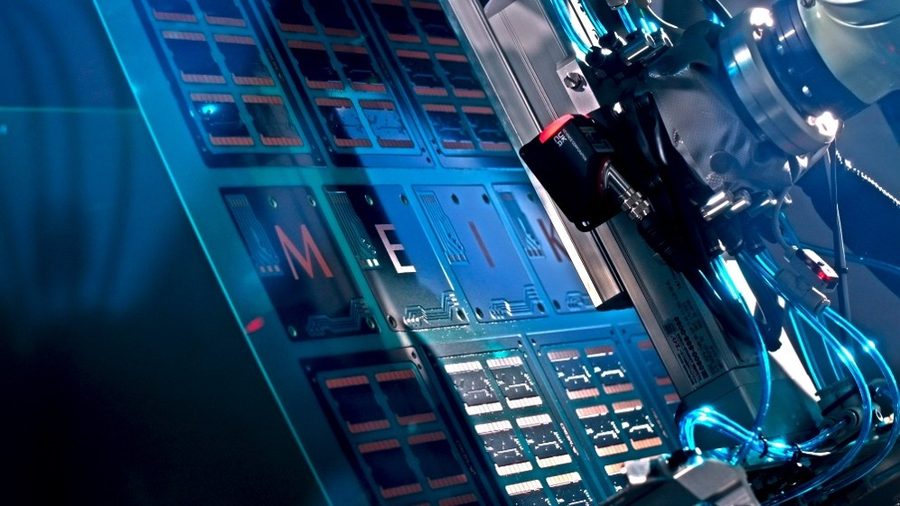
Electronic devices have become an indispensable part of modern life. From smartphones and tablets to household appliances, office equipment, and automobiles, today’s products increasingly rely on sophisticated electronic components to deliver the functionality and performance consumers expect.
Printed circuit boards (PCBs) are at the heart of countless products that support modern life. Without a stable supply of PCBs, the manufacturing of consumer electronics, industrial equipment, and automobiles would not be possible.
While automation has advanced across many PCB manufacturing processes, the material handling tasks surrounding production equipment remain a significant challenge. These tasks include loading PCBs into equipment, unloading them after processing, and transferring them to the next production stage.
Due to factors such as production floor layouts, equipment-specific requirements, and the wide variety of PCB types and sizes, these operations often continue to rely heavily on manual labor. As a result, PCB loading and unloading remains one of the most labor-intensive areas in many manufacturing environments.
To further advance the automation of PCB loading and unloading operations, Meiko Corporation, a leading printed circuit board manufacturer, introduced a PCB Loading Cell equipped with Kawasaki’s RS Series robots.
Progressive Automation at Meiko’s PCB Manufacturing Facility: Why the RS Series Was Chosen
Founded in 1975 as a printed circuit board manufacturer, Meiko Corporation is headquartered in Kanagawa Prefecture, Japan. Today, the company operates production facilities both in Japan and overseas, providing comprehensive electronics solutions that encompass design, manufacturing, and related services.
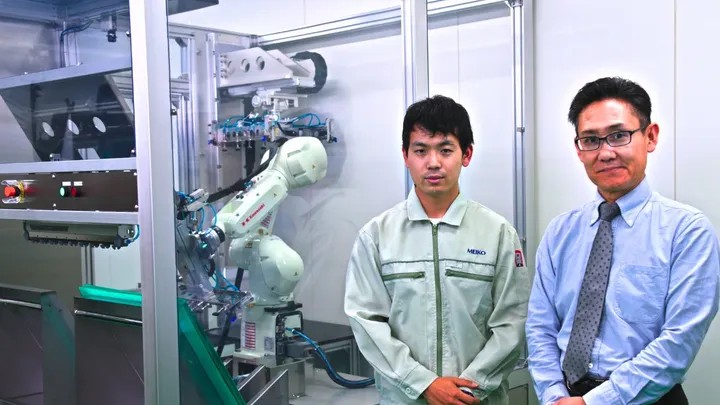
Mr. Tanitsugu, Manager of the FA Systems Group within the Industrial Systems Equipment Department, explains the background behind the introduction of this automation system.
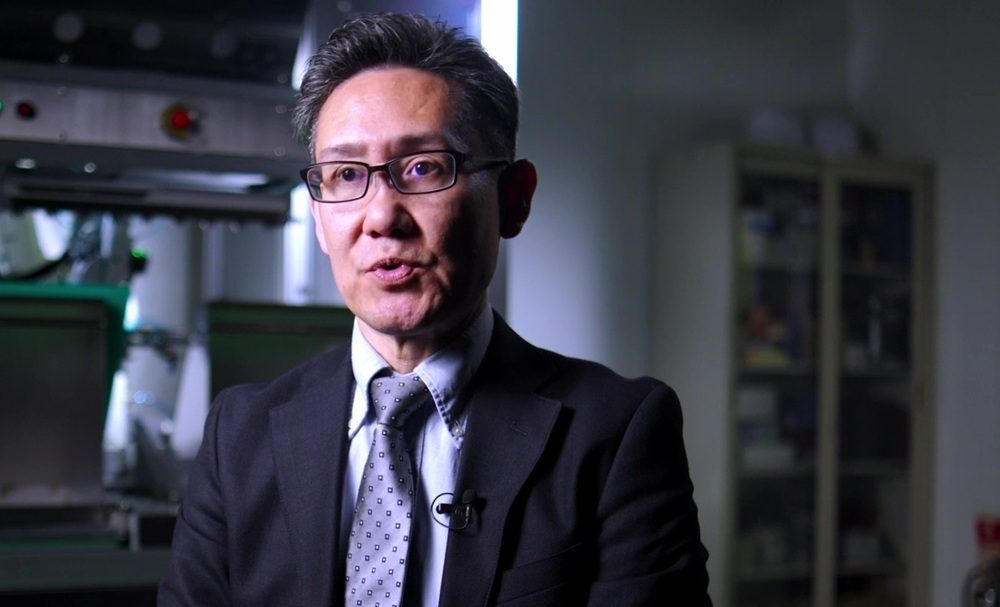
Why Meiko Chose Kawasaki’s RS Series
Meiko has been gradually replacing manual operations with robotic automation in the loading and unloading processes of printed circuit board manufacturing. The company primarily utilizes Kawasaki’s RS Series robots for these applications.
“We handle a variety of rack types, including L-racks, flat racks, and baskets,” explains Mr. Tanitsugu. “Because six-axis robots can flexibly adjust their posture and movements, they are well suited to these tasks.”
The substrates processed in PCB manufacturing vary significantly in size and weight. In addition, multiple rack types are often used simultaneously on the production floor, and equipment specifications differ depending on the process and manufacturer. To address these variations, Meiko placed particular importance on versatility and ease of handling when selecting a robot.
“Since substrate sizes and weights vary, it is beneficial to have a product lineup that covers everything from small to large models. The RS Series is particularly easy to work with because its arm design is very slim, reducing the risk of cables becoming caught during operation.”
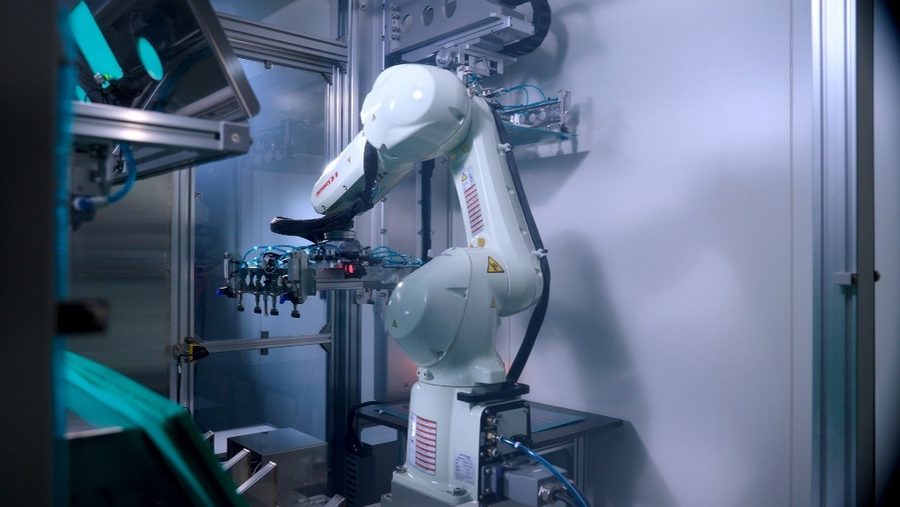
As Mr. Tanitsugu notes, Kawasaki’s RS Series of small and medium-payload industrial robots features a unique hollow wrist structure that allows cables and air lines to be routed internally through the arm. This simplifies cable management and enables stable operation while minimizing the risk of interference, even in confined spaces around production equipment.
Although the RS007L is currently used in this system, Kawasaki and Meiko can recommend the most suitable model based on each customer’s equipment specifications, substrate sizes, and production requirements. Options include the RS007L, RS013N, RS025S, and RS025N, among others from the RS Series lineup.
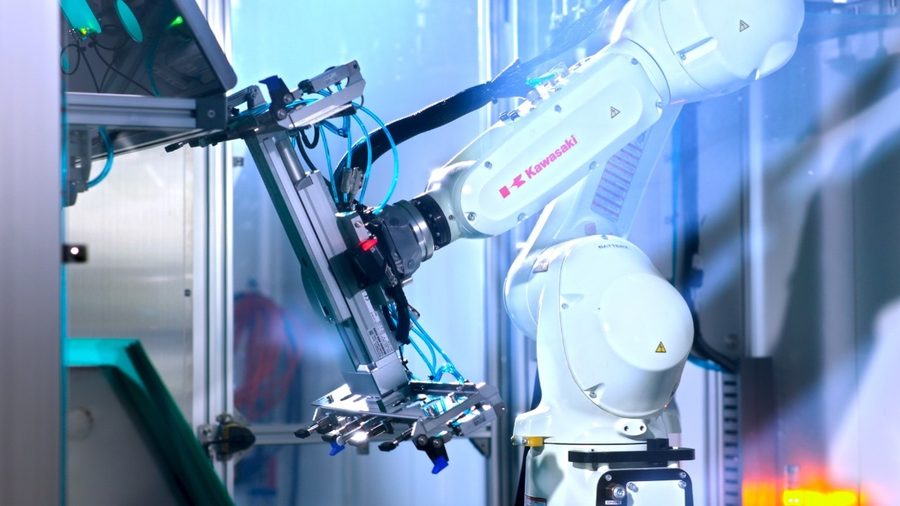
L-Racks Containing Both PCBs and Paperwork: A Common Shop Floor Practice That Becomes a Barrier to Automation
One of the key processes targeted by the substrate loading cell is the automatic loading of PCBs from L-racks into processing equipment.
A major challenge in this process is that the L-racks contain not only PCBs but also separator sheets and paperwork used for protection and identification purposes. To maintain productivity, the system must reliably distinguish between these similar-looking items and ensure a continuous flow of materials without errors or interruptions.
Mr. Yoshimatsu of the FA Systems Group, Industrial Systems Equipment Department, explains the objective behind the new system:
“To achieve stable automation, it was essential to accurately identify and handle only the PCBs while preventing separator sheets and paperwork from being mistakenly picked up. The new system was developed to address this challenge while maintaining high equipment utilization and operational efficiency.”
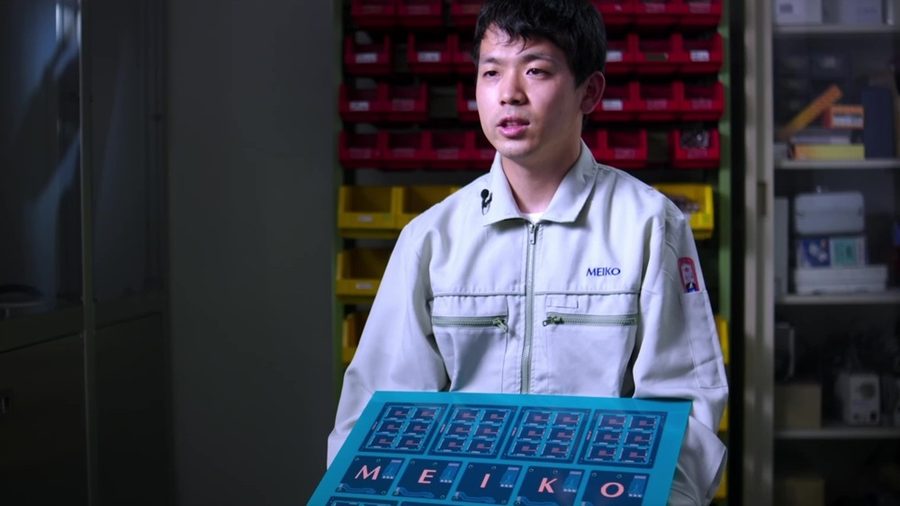
The newly introduced substrate loading cell automates the process of identifying and loading two types of materials from L-racks, PCBs and laminates, into the processing equipment using image-sensing technology.
One challenge in automating this process is that substrates are manually placed into the L-racks by operators, which inevitably results in slight positional variations. While human workers can instinctively compensate for these misalignments, robots require a much higher level of positional accuracy.
To address this issue, the cell incorporates a camera-based position correction system. By detecting the exact location and orientation of each substrate, the system automatically compensates for any misalignment before feeding it into the processing machine. This enables stable and reliable operation without requiring precise manual placement.
Mr. Yoshimatsu of the FA Systems Group, Industrial Systems Equipment Department, highlights this feature:
“Because operators place the substrates on the L-racks manually, some degree of misalignment is unavoidable. One of the key advantages of this system is its ability to use a camera to detect and correct that misalignment automatically, allowing the substrates to be fed smoothly into the processing equipment.”
By combining vision-based detection with robotic handling, the system ensures consistent operation while reducing the burden on operators and improving process reliability.
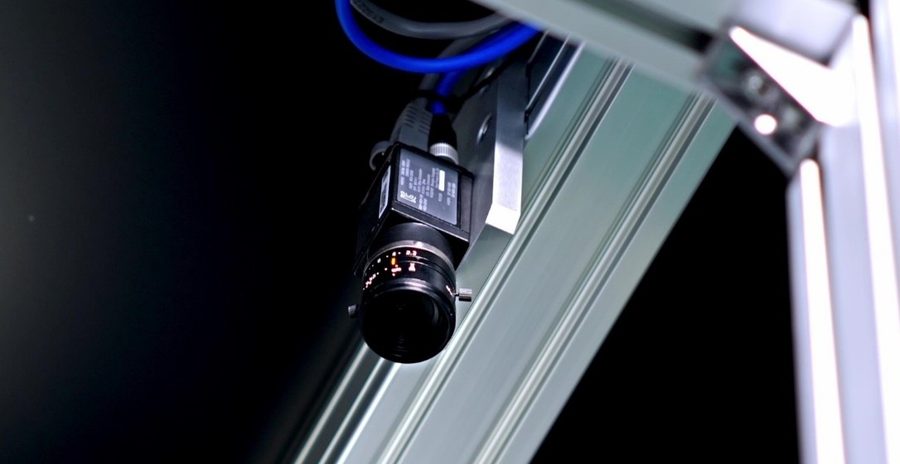
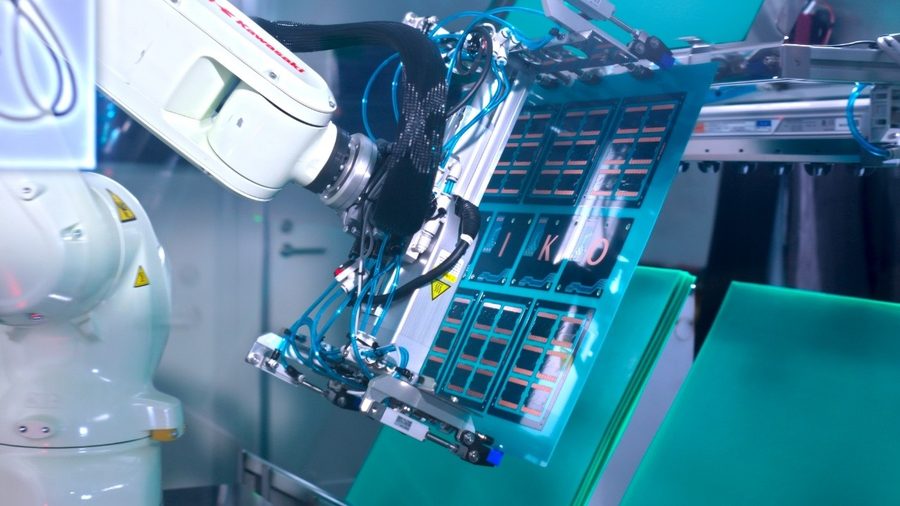
Equipped with Non-Contact Peripheral Suction, an Automatically Adjustable Gripper, and a Flipping Mechanism for Front-and-Back Handling
Because printed circuit boards are precision products, it is essential to minimize any impact on their surface quality during handling.
To achieve this, the substrate loading cell employs a peripheral vacuum gripping system that lifts the board by its edges. This design prevents the robot hand from coming into direct contact with the board’s functional surface, helping to maintain product quality and ensure stable handling.
As Mr. Yoshimatsu explains:
“One of the key features of this system is that the robot hand never comes into direct contact with the surface of the product.”
The system also incorporates an automatically adjustable gripper to accommodate a wide range of PCB sizes. By automatically adapting to different board dimensions, the mechanism significantly reduces setup time during product changeovers and enables stable operation in high-mix manufacturing environments.
This flexibility allows the system to handle multiple product types efficiently while reducing the burden on operators and maintaining consistent production performance.
Enabling Automated Processing of Both Sides of the PCB
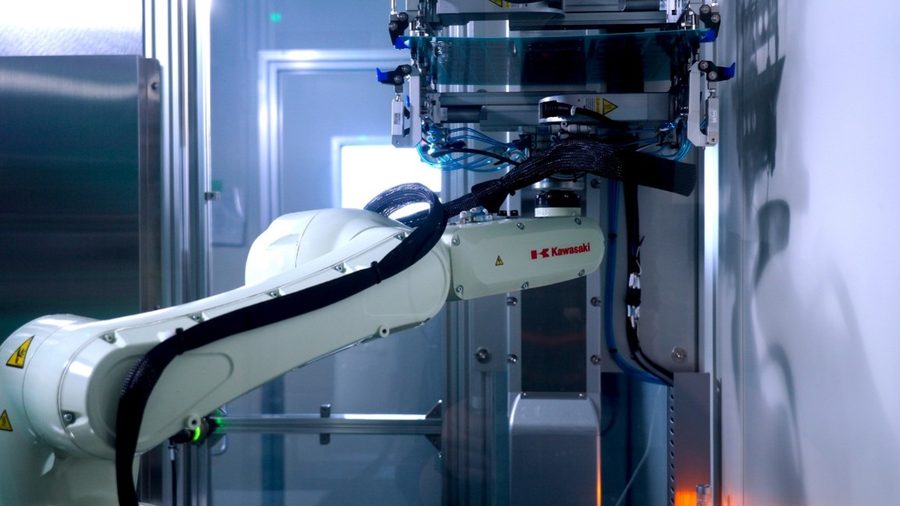
Many PCB manufacturing processes require both sides of the board to be handled. When only one side can be processed at a time, additional transfer operations and setup work are required, creating inefficiencies in the production flow.
To address this challenge, the substrate loading cell incorporates an in-line board flipping mechanism that automatically reverses the PCB within the system. This enables both front-side and back-side processing without manual intervention, reducing handling steps between processes and improving overall productivity.
As Mr. Yoshimatsu explains:
“When only one side of the board can be processed, the operation inevitably becomes a two-step process. With this system, the PCB can be flipped automatically within the machine, allowing both sides to be processed efficiently.”
By integrating board flipping into the automation cell, the system minimizes manual handling, reduces intermediate setup work, and helps streamline the manufacturing process while maintaining stable production performance.
Minimizing Changeovers in High-Mix Production: Operators Simply Set the Cart in Place
As the variety of PCBs continues to increase, production conditions vary depending on the size, specifications, and processing requirements of each product.
One of the major challenges in implementing automation is that increasing product diversity often leads to more frequent setup changes, ultimately placing a greater burden on operators. Meiko therefore sought to develop an automation solution that could be used continuously in a high-mix production environment without increasing workload on the shop floor.
As Mr. Yoshimatsu explains:
“One of the key benefits of this system is the significant reduction in setup changes required by operators.”
The system is designed to operate automatically once the operator loads the PCBs onto a cart and places it in the equipment. Even in high-mix production environments, different product types can be handled with minimal operator intervention, making the system easy to use regardless of skill level.
By reducing setup work and simplifying operation, the system helps manufacturers improve productivity while maintaining the flexibility needed to accommodate an increasingly diverse product mix.
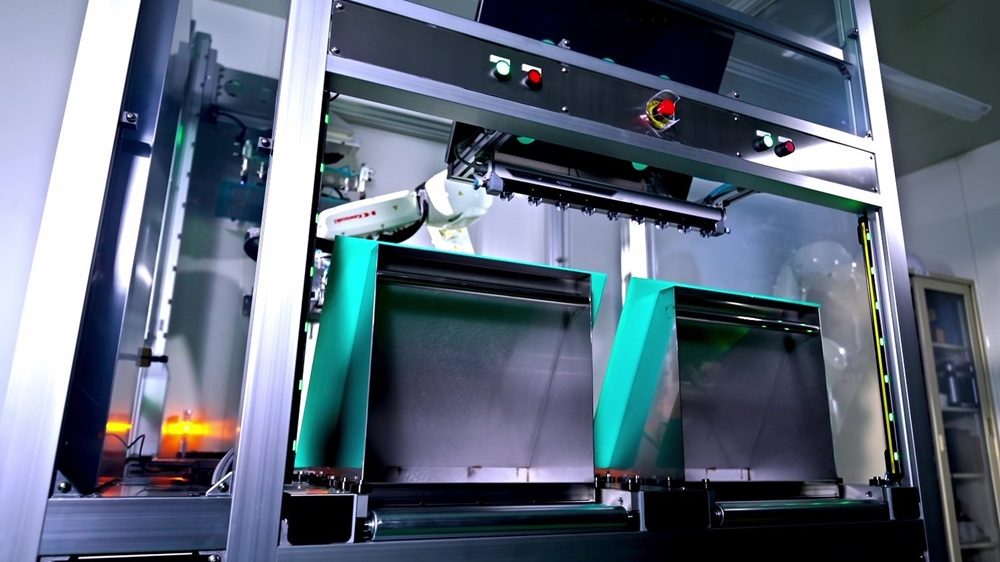
What manufacturers need on the shop floor is not an automation system that can only be operated by a handful of skilled workers, but one that can be integrated seamlessly into everyday production.
Ease of operation was therefore a key design objective for this substrate loading cell. By minimizing manual setup requirements and simplifying operation, the system can be used effectively by operators regardless of their level of experience.
As a result, the system helps maintain high equipment utilization while delivering meaningful labor-saving benefits.
An automation solution that anyone can operate with ease ultimately leads to higher productivity, more stable operation, and greater workforce efficiency.
Why Meiko Chose the RS Series: Six-Axis Flexibility and Ease of Use on the Shop Floor
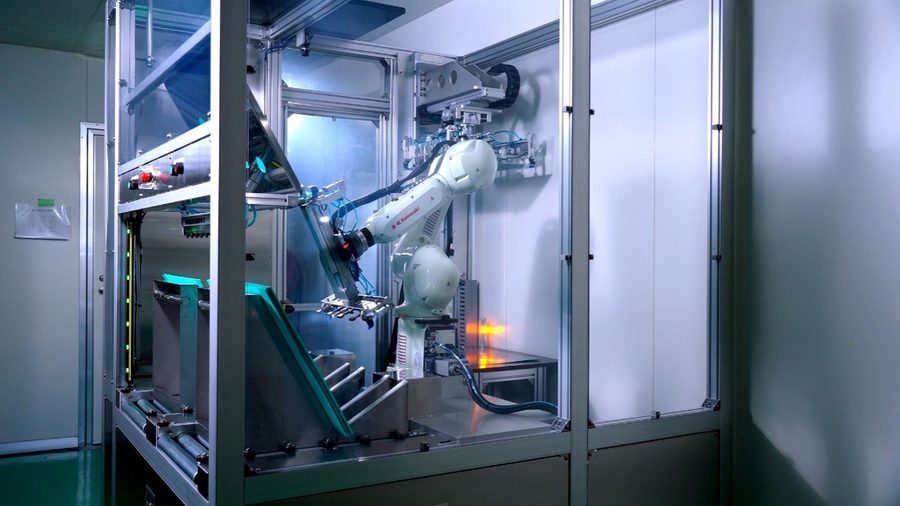
In Meiko’s PCB manufacturing processes, a variety of loading methods are used, including L-racks, flat racks, and baskets. Because the loading destinations and handling requirements differ from one process to another, the robot must be capable of adapting its approach angle, posture, and movement to suit each application.
Against this backdrop, Meiko evaluated the suitability of six-axis robots and selected Kawasaki’s RS Series as the core platform for its automation initiatives.
According to Mr. Tanitsugu, the decision was based not only on specifications and performance, but also on ease of use in real production environments.
“The RS Series is easy to work with because its slim arm design helps prevent cables from becoming snagged during operation.”
Features such as cable-friendly routing and a compact arm profile may seem like small details, but they play an important role in reducing potential causes of downtime, simplifying maintenance, and accelerating system start-up and commissioning.
These practical advantages were also key factors as Meiko looked to expand automation across multiple production lines and manufacturing sites.
For Meiko, the RS Series was not simply a robot with the required specifications. Its combination of six-axis flexibility, operator-friendly design, and proven practicality on the shop floor made it an ideal platform for broader automation deployment.
As a result, Kawasaki’s RS Series has earned high marks from Meiko for both its design concept and its ability to deliver reliable performance in real-world manufacturing environments.
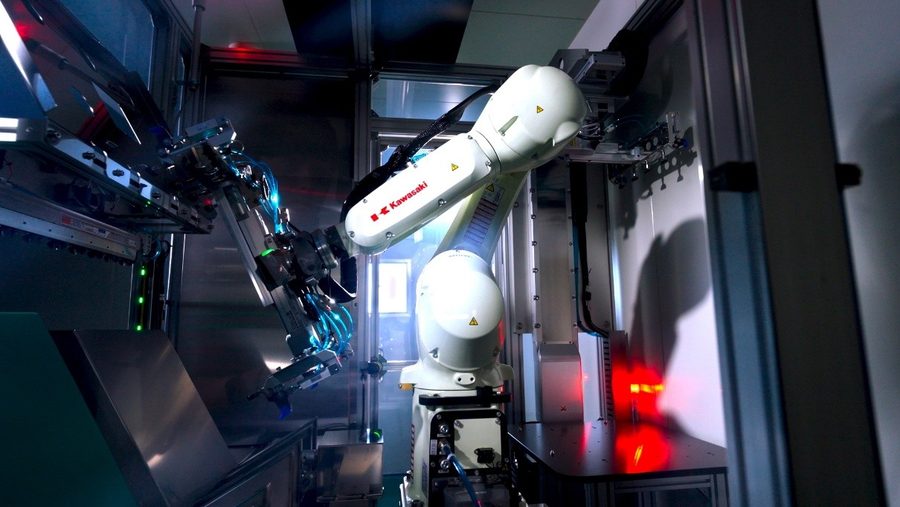
Cell Workflow Example: Automating the Entire Process from Identification and Alignment Correction to Loading and Unloading
The following example illustrates a typical workflow performed by the substrate loading cell.
- The operator places a cart loaded with PCBs at the system.
- Using a vision sensor, the robot identifies the items in the L-rack and distinguishes between PCBs and separator sheets.
- The robot picks up the PCB using a peripheral vacuum gripping system to avoid contact with the functional surface.
- A camera detects any positional deviation and automatically performs alignment correction.
- The PCB is automatically loaded into the processing equipment.
- After processing is completed, the PCB is automatically unloaded.
- When required, the system automatically flips the PCB within the cell to enable both front-side and back-side processing.
- The PCB is automatically transferred to the next process or designated receiving position.
Although the destination equipment varies depending on the process, the system can be configured as a versatile loading cell compatible with a wide range of production equipment, including shuttle-stage systems.
Its flexible design enables seamless integration with different manufacturing processes, allowing the same automation concept to be applied across multiple applications and production lines.
Beyond Labor Savings: Enhancing Quality Consistency and Accelerating Smart Factory Initiatives
Loading and unloading operations are often highly dependent on the skills and judgment of individual operators. As product diversity increases, manual handling processes can become a source of errors, variability, and increased workload.
By automating these processes, the substrate loading cell helps standardize operations, improve quality consistency, and increase overall process utilization. In addition, its flexible architecture, which is not tied to a specific piece of equipment, enables deployment across multiple processes and machine types. This creates a scalable foundation that can support future production-line expansion and smart manufacturing initiatives.
According to Mr. Tanitsugu, the role of loading cells has become increasingly important as manufacturers advance their smart factory strategies.
“While we are working to reduce labor requirements in our existing facilities, we also want to make our newest factories, including the Tendo Plant, even smarter.”
In line with these initiatives, Meiko is also promoting automation of its PCB drilling processes at the Tendo Plant through the use of Kawasaki’s autonomous mobile robot solutions.
For Meiko, the introduction of the substrate loading cell represents more than a labor-saving measure. By combining operational standardization, quality improvement, and production flexibility, it serves as a key step toward the realization of a smarter and more sustainable manufacturing environment.
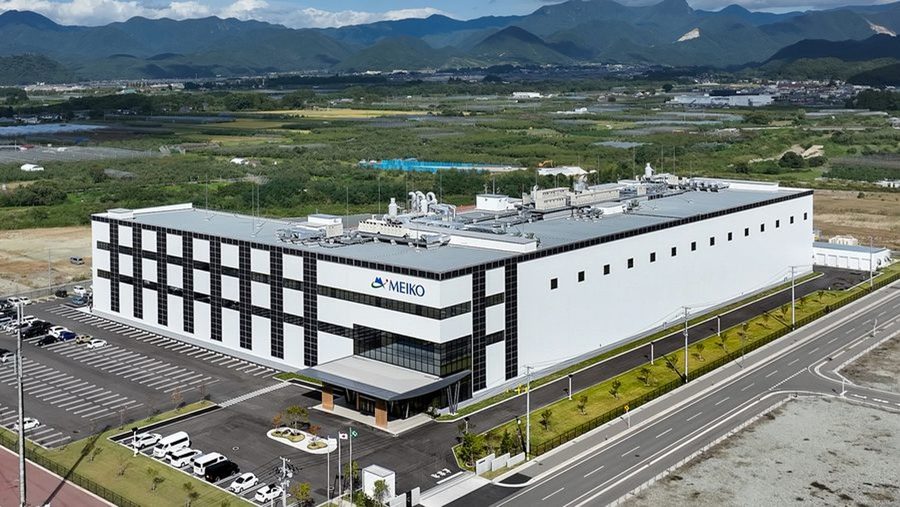
Looking ahead, Meiko plans to further increase the level of automation across its manufacturing operations by replacing peripheral tasks traditionally performed by operators with robotic solutions.
At the heart of this initiative is the versatile loading cell built around Kawasaki’s RS Series of small- and medium-payload industrial robots. Designed to accommodate a wide variety of PCB products, rack configurations, and production processes, the system provides the flexibility required for modern electronics manufacturing.
As product diversity and production complexity continue to grow, Meiko sees the loading cell as more than just an automation tool. It is expected to serve as a practical and scalable solution that supports the next stage of automation in PCB manufacturing.
By combining flexibility, ease of use, and compatibility with a wide range of production equipment, the RS Series-based loading cell provides a foundation for expanding automation across multiple processes and manufacturing sites.
For Meiko, it represents a realistic path toward greater productivity, improved operational consistency, and the realization of smarter manufacturing.
Related Video
[Company Profile] Meiko Corporation
- Business activities: Design, manufacture, and sale of printed circuit boards and other electronic related business, as well as related services.
- Main Products: Double-sided and multi-layered through-hole boards, build-up boards, flexible boards, flex and rigid boards, high current boards, heat dissipation boards, component embedded boards, EMS, metal masks, mechatronics equipment, imaging equipment, imaging systems
- Headquarters: 5-14-15, Ohgami, Ayase, Kanagawa, Japan
- Establishment: November 25, 1975
- Representative: Yuichiro Naya, President and Representative Director
Associated Products
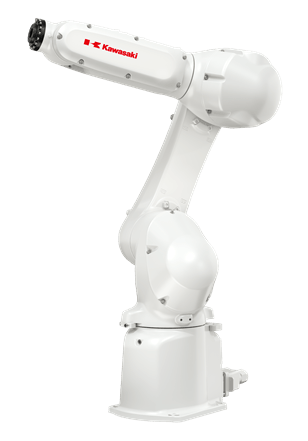
RS007N
High Speed, High Performance Robot
The R series robots are setting the benchmark for all small to medium duty industrial robots. The RS007N is part of the next generation of the series, which offers a redesigned arm structure and main-unit weight reductions. By utilizing a cantilever design for the upper arm section, Kawasaki has achieved a longer maximum reach and an expanded range of motion below, behind and in the immediate vicinity of the robot. These enhancements result in the fastest operating speeds in its class along with increased working ranges.
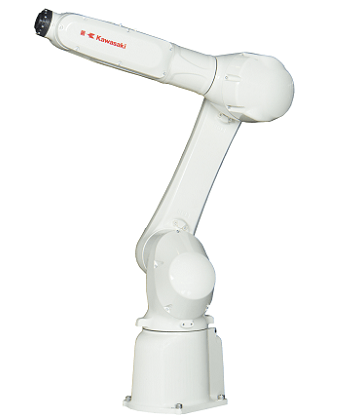
RS007L
High Speed, High Performance Robot
The R series robots are setting the benchmark for all small to medium duty industrial robots. The RS007L is part of the next generation of the series, which offers a redesigned arm structure and main-unit weight reductions. By utilizing a cantilever design for the upper arm section, Kawasaki has achieved a longer maximum reach and an expanded range of motion below, behind and in the immediate vicinity of the robot. These enhancements result in the fastest operating speeds in its class along with increased working ranges.
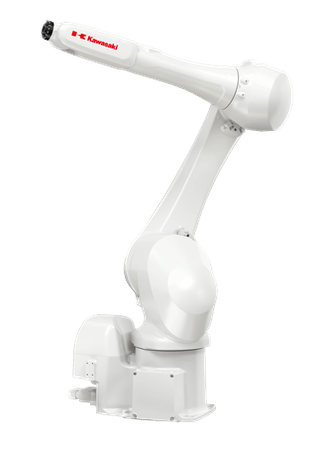
RS013N
High Speed, High Performance Robot
The R series robots are setting the benchmark for all small to medium duty industrial robots.
The RS013N is part of the next generation of the series, which offers a redesigned arm structure and main-unit weight reductions. By utilizing a cantilever design for the upper arm section, Kawasaki has achieved a longer maximum reach and an expanded range of motion below, behind and in the immediate vicinity of the robot. These enhancements result in the fastest operating speeds in its class along with increased working ranges.

RS025S
Compact Design, Flexible Installation
This new model inherits the proven features of the R Series while introducing a more compact robot body. By reducing the overall footprint, it meets the demands of environments with limited installation space—such as narrow areas or sites requiring multiple robots to be positioned as closely as possible. These improvements enable precise solutions for applications that were previously difficult to accommodate with our existing product lineup.
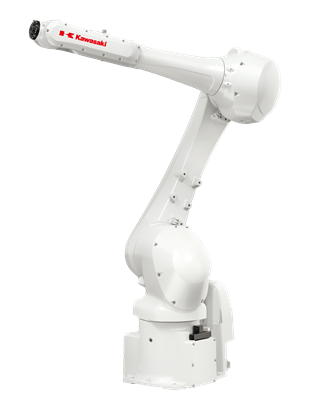
RS025N
High Speed, High Performance Robot
Kawasaki’s R series robots are setting the benchmark for all small to medium duty industrial robots. The compact design, along with industry leading speed, reach and work range make the R series robots ideal for a wide range of applications throughout a multitude of diverse industries.
The RS025N the latest model of the R series robots, which offers a redesigned arm structure and main-unit weight reductions. By utilizing a cantilever design for the upper arm section, Kawasaki has achieved a longer maximum reach and an expanded range of motion below, behind and in the immediate vicinity of the robot. These enhancements result in the fastest operating speeds in its class along with increased working ranges.