- IndustriesMarine
- ApplicationsArc Welding
- Robot SeriesBA series
Since its founding in 1878 as Kawasaki Tsukiji Shipyard, Kawasaki Heavy Industries has grown with shipbuilding at the heart of its business. Over the years, the company has expanded into a wide range of industries, manufacturing products such as aircraft, railway vehicles, motorcycles, industrial machinery, and robots. Even so, shipbuilding remains one of the cornerstone businesses that has shaped the company’s history and technological expertise.
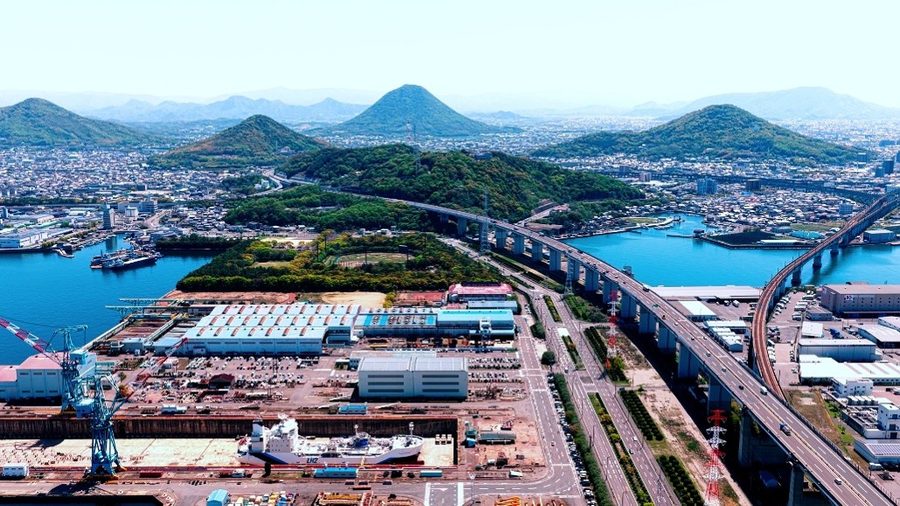
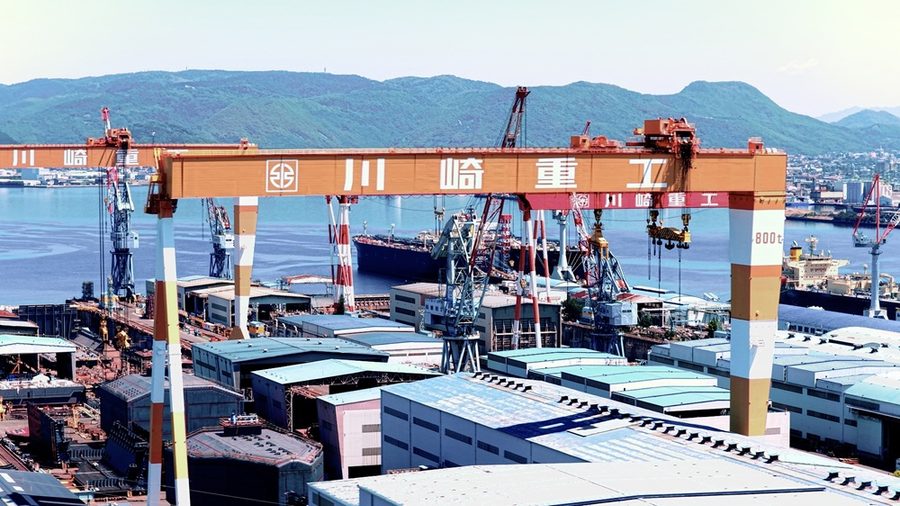
Located in Sakaide City, Kagawa Prefecture, the Sakaide Works serves as Kawasaki Heavy Industries’ principal shipbuilding facility, where large vessels such as LPG carriers, LNG carriers, and tankers are constructed.
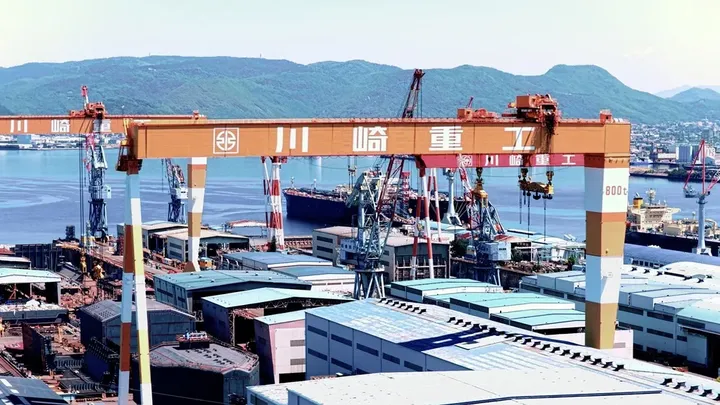
Across the expansive shipyard, vast workshops, towering cranes, and rows of massive hull blocks create a uniquely industrial landscape. Here, the highly sophisticated manufacturing processes required for the construction of large-scale vessels are carried out every day.
In shipbuilding, a vessel’s hull is constructed by assembling numerous prefabricated blocks. Among the many stages involved, the fabrication of hull blocks is particularly critical, as these structural components form the framework of the vessel and play a key role in ensuring its strength, durability, and safety.
This case study highlights the implementation of an automated grid welding system using eight arc welding robots in the final assembly process of hull blocks, demonstrating how robotics technology has enhanced productivity and welding quality in large-scale shipbuilding operations.
A Massive Number of Welds and Complex Hull Structures Posed Major Challenges to Automation
Hull blocks are built around a lattice-like framework formed by the intersection of longitudinal members, which run along the length of the vessel, and transverse members, which extend across its width. This structural arrangement is designed to withstand the various forces acting on the hull during operation, ensuring the vessel’s strength, rigidity, and overall structural integrity.
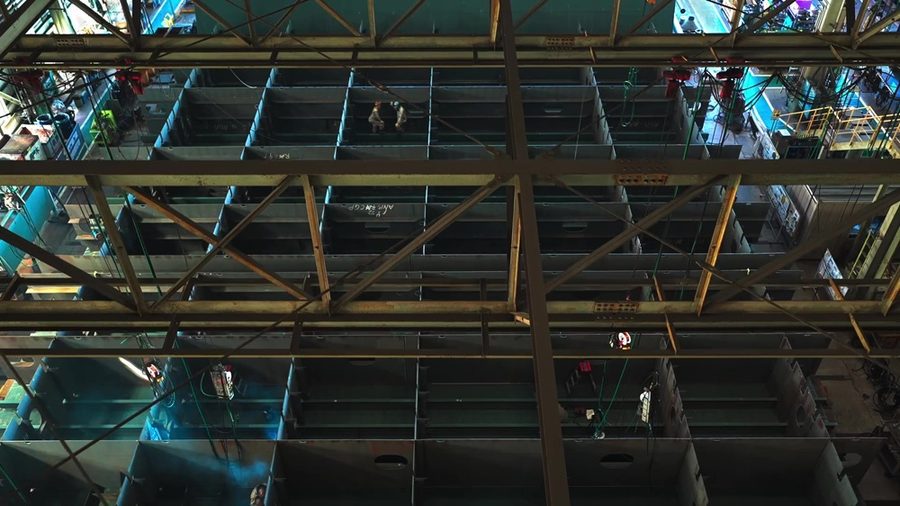
Each grid section requires a variety of welding operations, including horizontal fillet welds and vertical welds. For large vessels, the number of welds is enormous, resulting in a substantial volume of work. In addition, the size and configuration of each hull block vary, making it difficult to standardize welding operations under identical conditions.
Traditionally, the welding of hull blocks has relied heavily on the skills and expertise of experienced welders. To maintain consistently high quality, each weld must be performed accurately and reliably despite changing work positions, access conditions, and block configurations.
Automating this process, however, posed a significant challenge. The extensive work area, vast number of weld points, and variations in the size and geometry of individual hull blocks, all characteristic of large-scale shipbuilding, made it difficult to achieve stable and consistent automated welding. As a result, the automation of grid welding for hull blocks remained a major hurdle for many years.
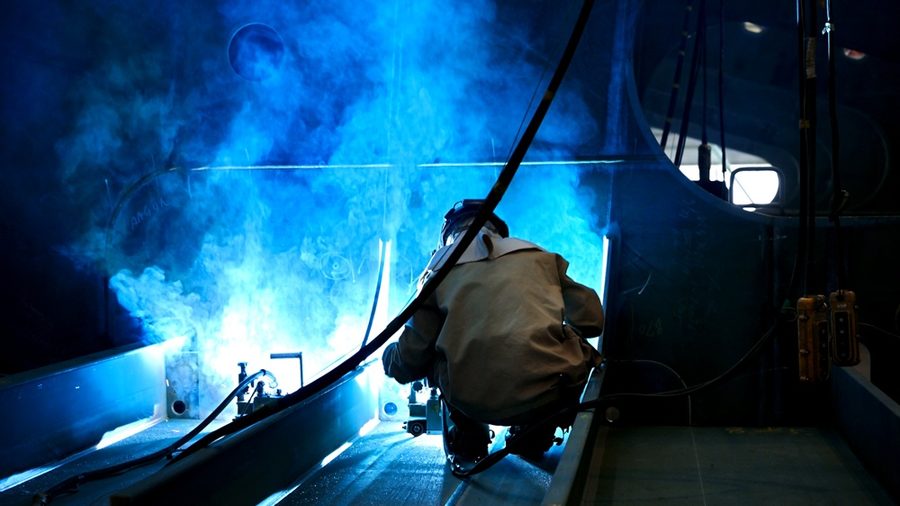
Eight Robots Take on the Challenge of Automating Grid Welding for Large Hull Blocks
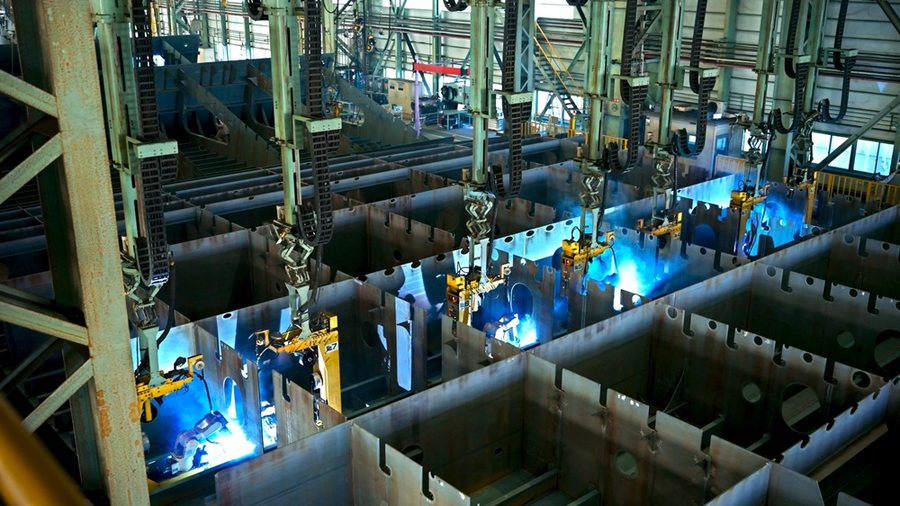
In response to the challenges outlined above, Kawasaki Heavy Industries utilised its in-house robot technology to develop and implement a system in which eight arc welding robots automatically weld the grid joints during the major assembly process of hull blocks.
In the welding of shipbuilding blocks, the workpieces themselves are large, and the welding areas cover a wide range. Consequently, simply installing robots in fixed positions is insufficient to handle the welding of each grid joint.
In this system, eight robots are suspended from an NC-controlled travelling gantry and automatically moved to the grid joint positions requiring welding based on higher-level data. The robots descend from the top of the block to the designated grid joint, position themselves accurately, and then commence welding.
In other words, rather than the robots ‘waiting at a fixed location’, the system enables them to proceed with welding whilst moving to the required locations within the massive ship hull block.
It is not merely the performance of the individual robots that underpins this automation. A key feature is that the system has been constructed to handle large-scale welding processes for shipbuilding blocks by combining a travelling gantry, suspension platforms, positioning mechanisms, control panels and offline teaching functions.
Main components of the installed system
- Eight Kawasaki arc welding robots
- NC-controlled traveling gantry for robot transport and positioning
- Suspended robot platforms for accessing grid welding locations
- Precision positioning mechanisms
- Centralized control system for operation and production data management
- Offline programming function utilizing production data
Automatic Welding Without Manual Teaching Through the Use of CAD Data
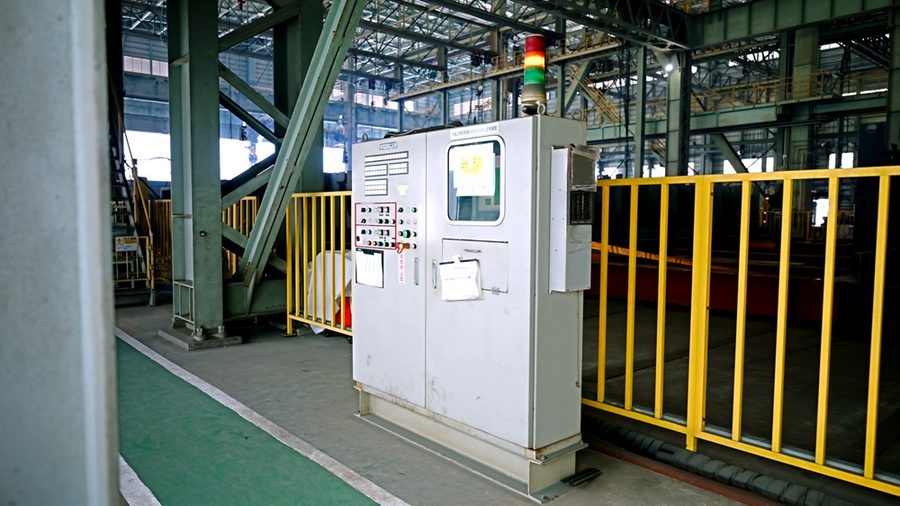
Hull blocks vary in size, shape, and configuration, making it essential to generate robot welding programs as efficiently as possible when implementing automation.
To address this challenge, the system is equipped with an offline programming system that leverages CAD data from upstream design processes. By utilizing this data, welding programs can be generated automatically, enabling the system to perform grid welding on hull blocks of varying dimensions and configurations without the need for manual robot teaching on the production floor.
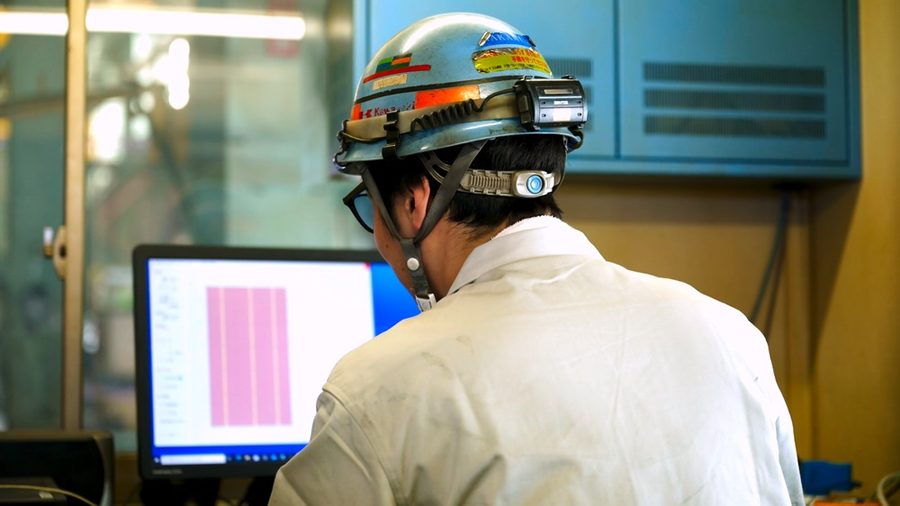
In the control room, operators review workpiece information, assign tasks to individual robots, and select the appropriate welding parameters. The system also allows production data to be edited as needed, including the addition, modification, or removal of welding task information to accommodate on-site requirements.
This provides the flexibility needed for shipbuilding operations, where conditions vary from block to block. Once the workpiece data has been selected and verified, automatic operation can be initiated directly from the central control panel.
During operation, the status of each robot can be monitored in real time via the system interface. Operators can also control the movement, positioning, and lifting functions of individual robots as required, ensuring both operational flexibility and efficient system management.
Traveling and Lifting Mechanisms for Accessing Deep Welding Locations Within Large Hull Blocks
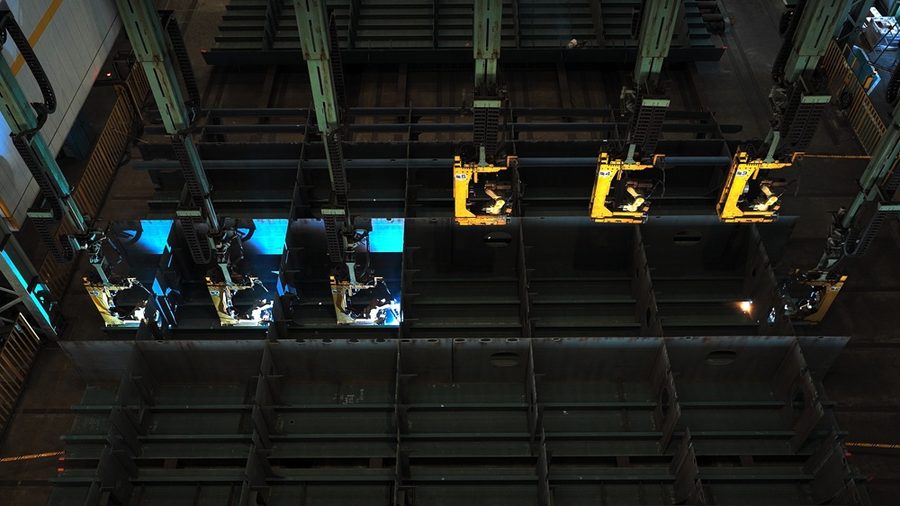
Each robot is transported to the designated welding location by an NC-controlled traveling gantry and then lowered into the hull block on a suspended platform. The platform provides a vertical travel stroke of approximately seven meters, enabling the system to access welding points deep within large hull blocks.
In addition, the suspended robot platform can rotate up to 180 degrees to accommodate different welding directions. This flexibility allows the robots to perform welding operations in a variety of orientations within the grid structure, ensuring efficient access to complex welding locations.
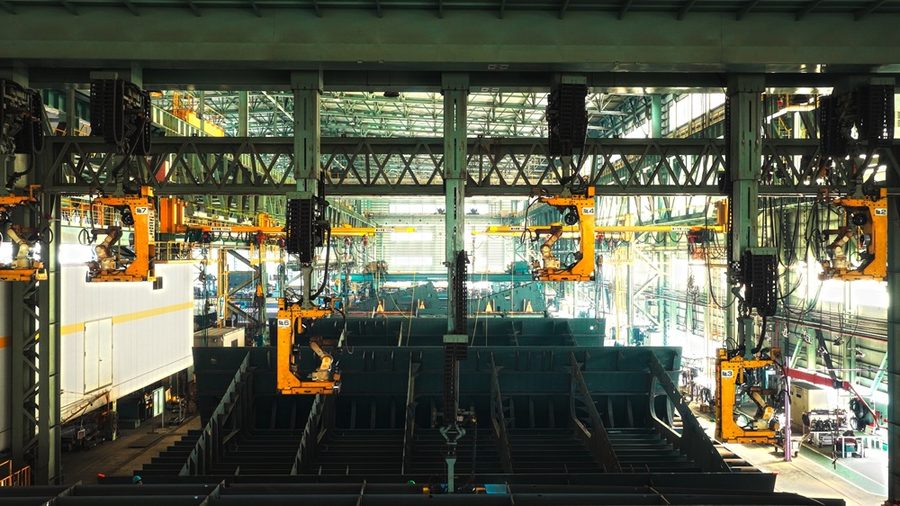
After the suspended robot platform reaches the designated location, it is centered within the welding area using left and right positioning cylinders. The distance from surrounding structural members is then adjusted by front and rear extension cylinders to ensure precise alignment.
The platform subsequently descends slowly into its final working position within the hull block. This highly accurate positioning capability enables the robot to be placed precisely at the required welding location, even within the large and complex structures characteristic of shipbuilding hull blocks.
By ensuring stable and repeatable robot positioning, the system provides the foundation for consistent, high-quality automated welding.
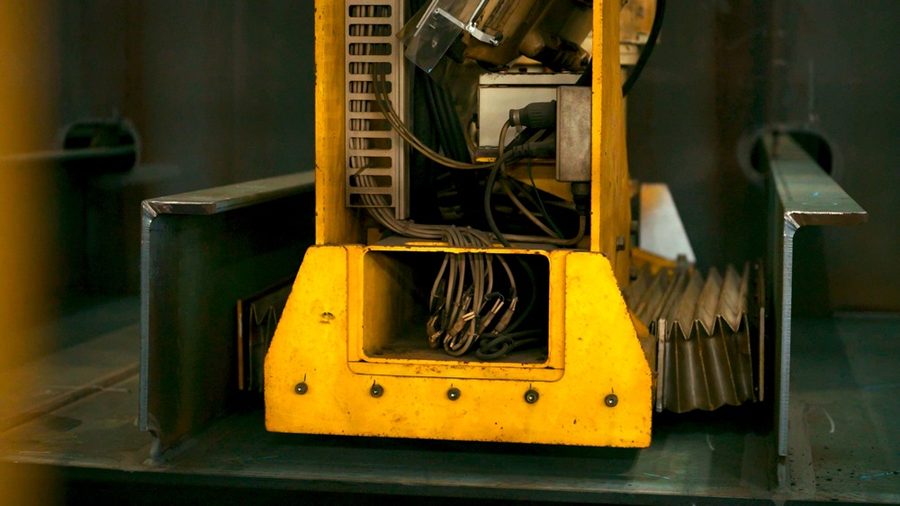
Verifying Component Positions to Ensure Consistent Welding Quality
During hull block welding, slight deviations can occur between the positions defined in the design data and the actual locations of structural members on the production floor. To address this, the system performs wire-touch sensing prior to welding to determine the actual start and end points of each weld and automatically applies positional corrections as needed.
The sensing method is selected according to the joint configuration, enabling the system to adapt to variations in component positioning and on-site conditions. As a result, welding can be carried out accurately based on the actual geometry of the workpiece rather than solely on design data.
For horizontal fillet welds, welding parameters are automatically optimized based on factors such as joint configuration, groove presence, and required leg length. For vertical welds on longitudinal and transverse members, the system automatically switches between appropriate welding and weaving modes, enabling highly efficient and stable automated welding.
Following each welding operation, the system automatically performs nozzle cleaning, wire cutting, and verification of wire stick-out length. By preparing the welding torch for the next operation, these functions help maintain stable sensing performance and ensure consistently high weld quality throughout the production process.
Efficient Construction of Large Hull Blocks Through Automated Positioning and Welding
Once welding within a grid section is completed, the robot returns to its home position and the suspended platform is raised. After all assigned welding tasks have been completed, the traveling gantry moves to the next set of grid sections, where the sequence of lowering, positioning, sensing, and welding is repeated.
Through this cycle, multiple robots operate in coordination to perform welding across the entire hull block. By continuously moving to the required welding locations and carrying out their tasks efficiently, the system enables the automated fabrication of large and complex hull structures while maintaining high productivity and consistent welding quality.
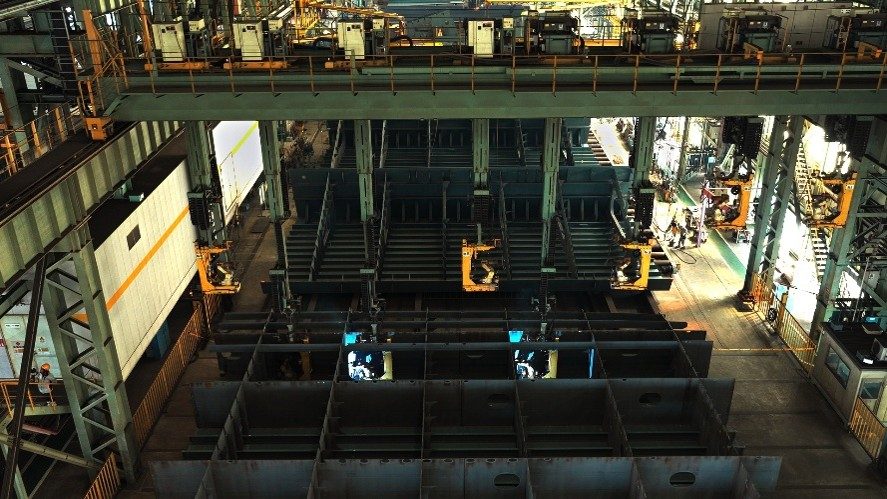
This system automates not only the welding process itself, but also a range of supporting operations, including robot movement, positioning, sensing, and nozzle maintenance. By integrating these processes into a single automated workflow, the system helps improve productivity, reduce manual workload, and ensure consistently high welding quality in shipbuilding operations.
Automatic welding process
- Welding programs are automatically generated from CAD design data
- The operator reviews workpiece information and selects welding parameters
- The traveling gantry moves each robot to the designated grid section
- The suspended platform lowers and positions the robot within the grid structure
- The positioning mechanism precisely aligns the robot for welding
- Wire-touch sensing verifies the actual position of the workpiece and applies positional corrections
- Automatic welding is performed using the specified welding parameters
- After welding, the system performs nozzle cleaning and other preparatory tasks before moving to the next grid section
Kawasaki Heavy Industries’ Strength: Combining Robotics Expertise with Manufacturing Know-How
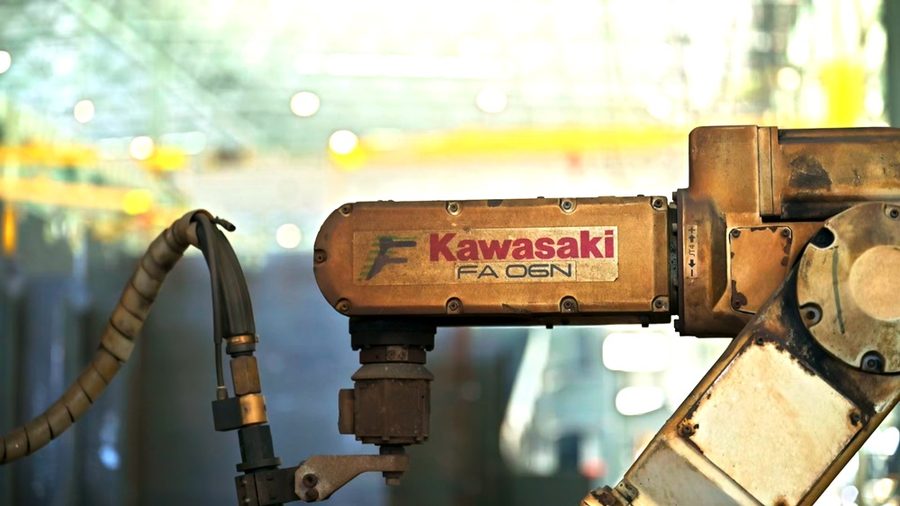
This automated welding system was introduced at Kawasaki Heavy Industries’ Sakaide Works in the late 2000s and remains in operation on the shipbuilding production line today. Its long-term use over nearly two decades demonstrates not only the durability and reliability of both the robots and the overall system, but also the value of an automation solution developed with a deep understanding of real manufacturing environments.
Kawasaki Heavy Industries is unique in that it is both a robot manufacturer and a robot user. Across a wide range of industries, including shipbuilding, aerospace, motorcycles, and industrial machinery, the company has continuously utilized, refined, and improved its robotics technologies within its own production facilities.
This hands-on manufacturing experience enables Kawasaki Heavy Industries to develop automation solutions that address real-world production challenges and deliver reliable performance on the shop floor.
Some challenges only become visible through real-world use on the production floor.
It is through continuously applying our robots in manufacturing that we are able to refine and advance our technology.
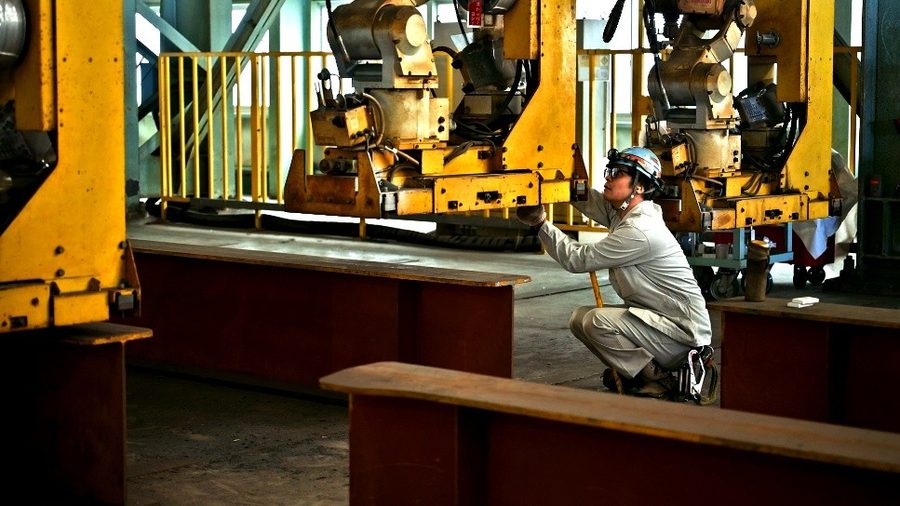
Shipbuilding presents a unique set of manufacturing challenges. The structures being built are enormous, their configurations are highly complex, and production conditions can vary significantly from one block to another. Successfully automating such an environment requires more than high-performance robots alone. It demands an integrated approach that combines robotics, peripheral equipment, control systems, sensing technologies, and operational expertise.
The Large-Scale Assembly Grid Welding System demonstrates how Kawasaki Heavy Industries has addressed these challenges by combining the manufacturing knowledge gained through its own shipbuilding operations with advanced robotics technology. The result is a practical automation solution designed to deliver reliable performance, consistent quality, and improved productivity in the demanding environment of large-scale shipbuilding.
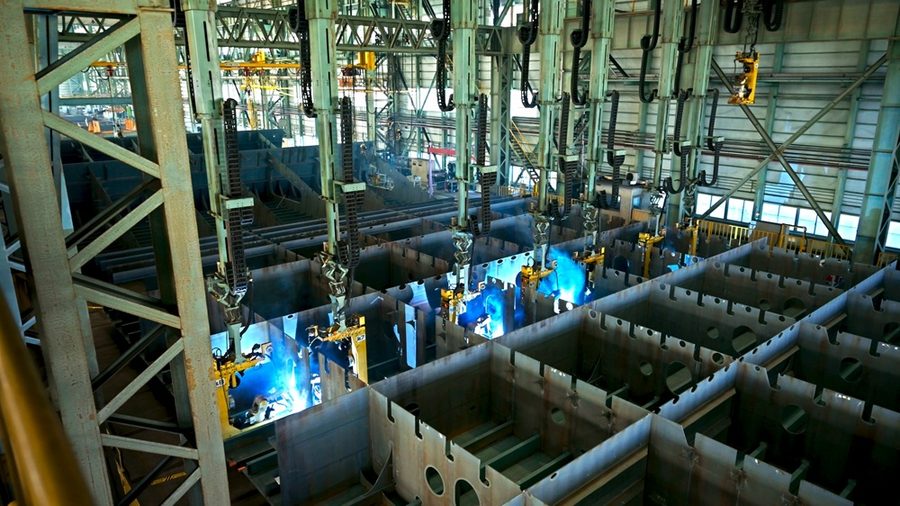
Our robotics technologies have been refined through real-world application in shipbuilding.
This strength comes from continuously taking on challenges within our own manufacturing operations.
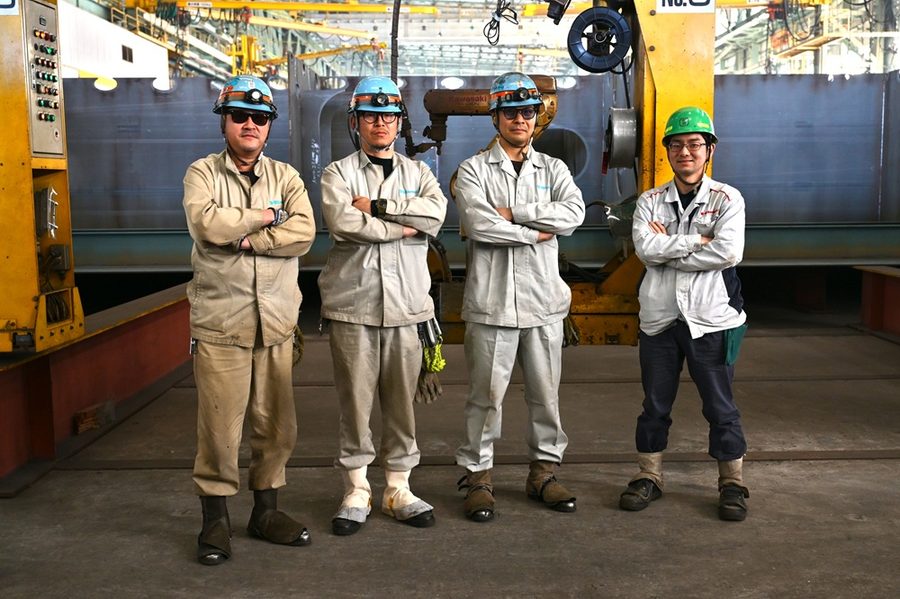
Company Profile
Kawasaki Heavy Industries, Ltd.
Energy Solutions & Marine Company
Ship & Offshore Division, Sakaide Works
- Application Featured in This Case Study: Automation of grid welding in the final assembly process for hull blocks
- Business Activities: Design, manufacturing, and construction of ships and offshore-related products
- Principal Vessel Types: Large vessels, including LPG carriers, LNG carriers, and tankers
- Location: Sakaide City, Kagawa Prefecture, Japan
- Key Feature: Kawasaki Heavy Industries’ flagship shipbuilding facility, capable of constructing large-scale vessels
Related videos
Associated Products
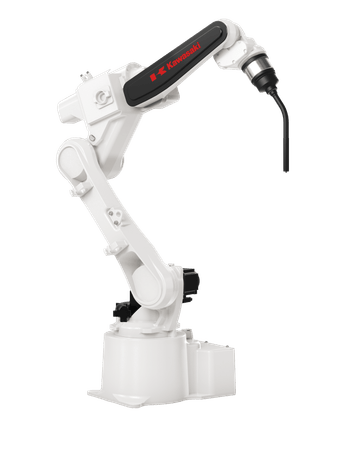
BA006N
THROUGH-ARM CABLE ARC WELDING ROBOT
The BA006N is a small model of the BA Series arc welding robot.
The long reach (1,445mm), yet compact arm is best suited to arc welding of various workpieces.