
Automation isn’t new. Hype is. And at SCADAware Inc., the difference has always been clear. For more than 25 years, SCADAware has quietly built a reputation for solving hard industrial problems long before robotics, AI, and “digital transformation” became buzzwords. The company’s journey from early SCADA systems to high-performance robotic automation tells a story not just about technology, but about people, partnerships, and process-first thinking.
Built on SCADA, Grown Through Curiosity
SCADAware’s roots go back to a time when industrial monitoring systems ran on mini-mainframes, and personal computers were just beginning to enter factories. Founder and President Rick Caldwell saw an opportunity early.
“I was an early adopter of SCADA systems in the 80s. When personal computers came along, I realized we could do the same work better on a PC.”
That mindset shaped SCADAware’s DNA: take emerging technology, apply it practically, and never lose sight of the customer’s operation. Over time, that philosophy expanded beyond software. SCADAware added controls, panels, data systems and eventually robotics while maintaining the same core approach: understand the process first, then engineer the solution.
Why Robotics Was the Natural Next Step
By 2017, Caldwell noticed a pattern during plan visits.
“Customers weren’t saying they didn’t have work. They were saying they couldn’t find people.”
Labor shortages, ergonomic risks, and throughput demand made robotics less of a “nice-to-have” and more of a necessity. In 2019, SCADAware launched its first robotic system and never looked back. Today, robotics represents a major and growing portion of the business, particularly in manufacturing, food & beverage, and heavy material handling applications. But SCADAware’s goal was never to replace people.
“It’s about finding better jobs for workers. Let robots do the dangerous, repetitive work and let people do higher-value tasks.”
A Real-World Palletizing Problem (and a Bigger Opportunity)
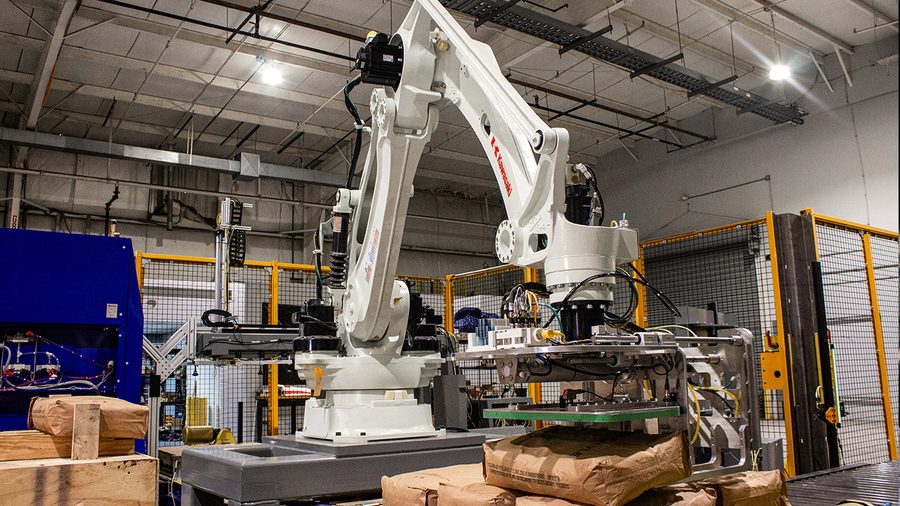
That philosophy was on full display in a recent palletizing project. The customer initially asked for a simple solution: replace an aging robot that had reached the end of its life. But when SCADAware engineers walked the floor, they saw something deeper.
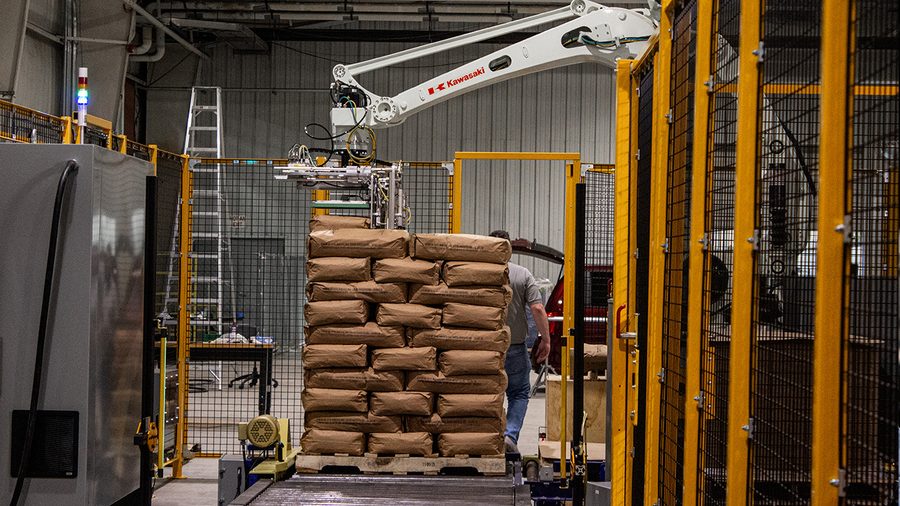
“The robot was doing too much,” recalls Doug McGuire, Segment Lead & Sales Engineer. “It was grabbing pallets, handling slip sheets and losing about 75 seconds between pallets. That time adds up fast.”
Instead of swapping one robot for another, SCADAware stepped back and asked a bigger question: What if the entire cell worked smarter?
Engineering for Throughput, Not Just Motion
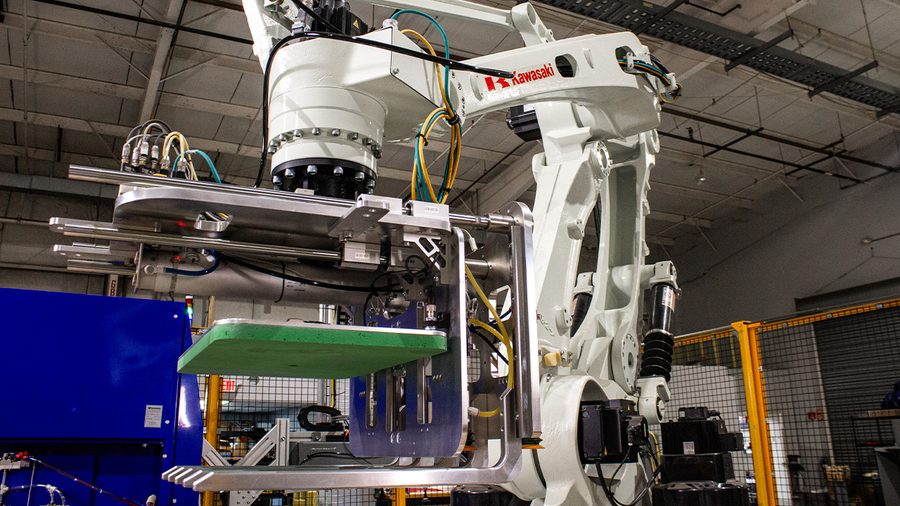
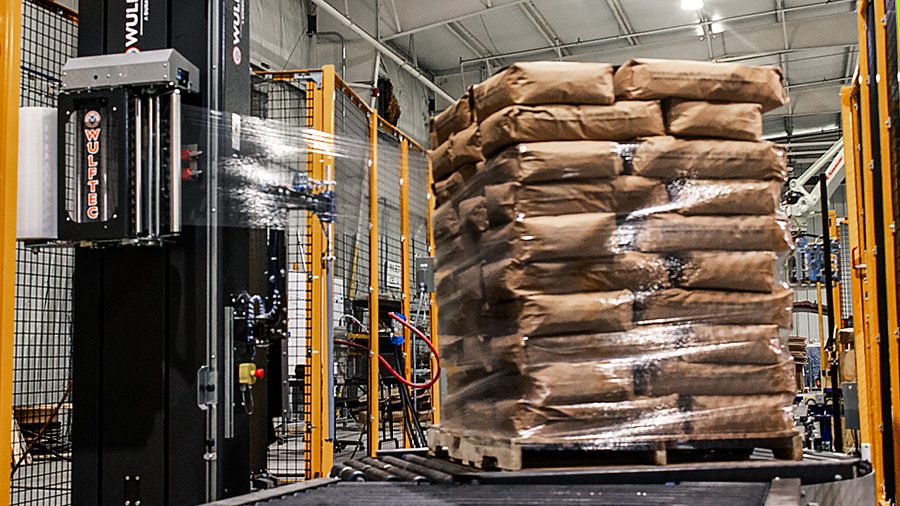
The answer wasn’t just a new robot it was a redesigned system. By combining a Kawasaki palletizing robot, a continuous load pallet dispenser, and automated slipsheet handling, SCADAware removed non-value-added tasks from the robot and eliminated production stoppages.
The result?
- Cycle time reduced from 825 seconds to 770 seconds per pallet
- Idle time between pallets cut from 75 seconds to 20 seconds
- 7% increase in annual throughput
- ~2,700 additional pallets per year
- ~$1.5M in incremental annual revenue
And that’s before factoring in safety improvements, reduced downtime, and better data visibility.
“When we showed them the ROI, they didn’t hesitate—even though it was the more expensive option upfront,” McGuire explains.
Why SCADAware Chose Kawasaki Robotics
For SCADAware, vendor relationships aren’t transactional, they’re strategic. When selecting a robot partner, the team evaluated availability, performance, support, and people.
“We chose Kawasaki because the robots were available, competitively priced, and backed by a smart, responsive team,” says Caldwell.
That partnership with Kawasaki Robotics has continued to grow since 2019, built on mutual trust and technical collaboration. Even engineers new to Kawasaki were able to ramp up quickly adding only days, not weeks, to development timelines.
Data Without the Noise
One of SCADAware’s biggest differentiators comes from its software heritage: knowing which data actually matters. Instead of overwhelming customers with dashboards, SCADAware focuses on actionable metrics like:
- Cell availability
- Downtime reasons
- Production counts
- Overall equipment effectiveness (OEE)
That clarity helps customers understand not just what is happening, but why.
“You don’t want all the data,” Caldwell explains. “You want the right data.”
The SCADAware Difference: Partnership Over Projects
Across every interview, one theme stands out: SCADAware doesn’t see customers as transactions. They sit at the table. They whiteboard together. They design with the future in mind. It’s a model built on honesty, integrity, and long-term thinking, and it’s why customers keep coming back.
A lot of our success comes from deep partnerships, says Scott Dappen, VP of Engineering. When customers say we solved a problem others couldn’t, that’s what matters.
Looking Ahead
From SCADA systems to robotics, and now toward AI and next-generation automation, SCADAware continues to evolve without losing sight of what matters most.
Technology will keep changing, Caldwell says. But if you focus on the customer, the process, and doing the right thing, you’ll be ready for whatever comes next.