
Robot Vision Systems: The Complete Guide to 2D and 3D Vision
Industrial robots have long been valued for their precision, speed, and repeatability. But in today’s rapidly evolving manufacturing environment, the most powerful robotic systems share one critical capability: vision. Robot vision systems allow robots to see, understand, and interact with their environment, enabling a new level of flexibility and intelligence in industrial automation. From identifying products on a conveyor to picking randomly stacked components from a bin, vision-guided robotics is transforming industries including manufacturing, logistics, automotive, aerospace, and food processing.
At Kawasaki Robotics, we believe vision should expand automation possibilities, not restrict them. That’s why our robots support technology-agnostic vision integration and vision-ready controllers, giving manufacturers the freedom to deploy the best solution for their application.
In this guide we explore:
- What robot vision systems are
- The differences between 2D and 3D robot vision
- Industrial applications for vision-guided robotics
- How Kawasaki Robotics simplifies vision integration
- Why vision systems are driving the future of automation
What Are Robot Vision Systems?
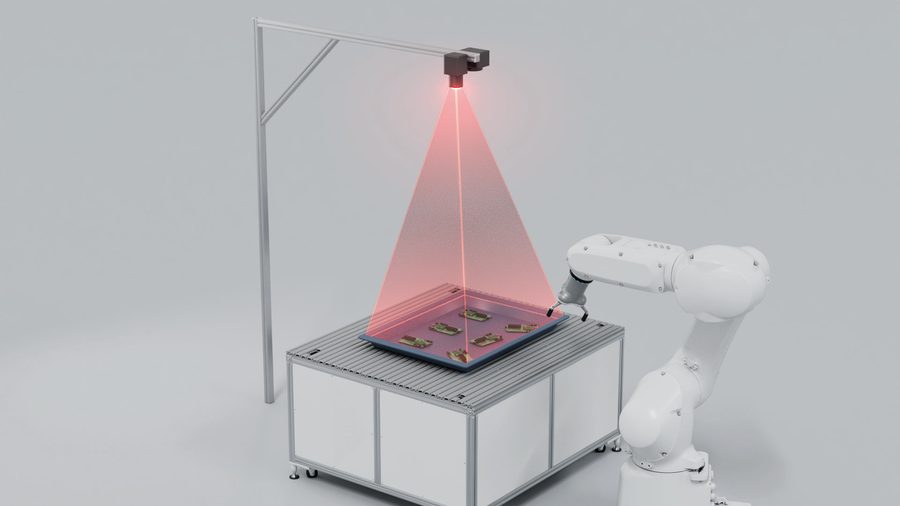
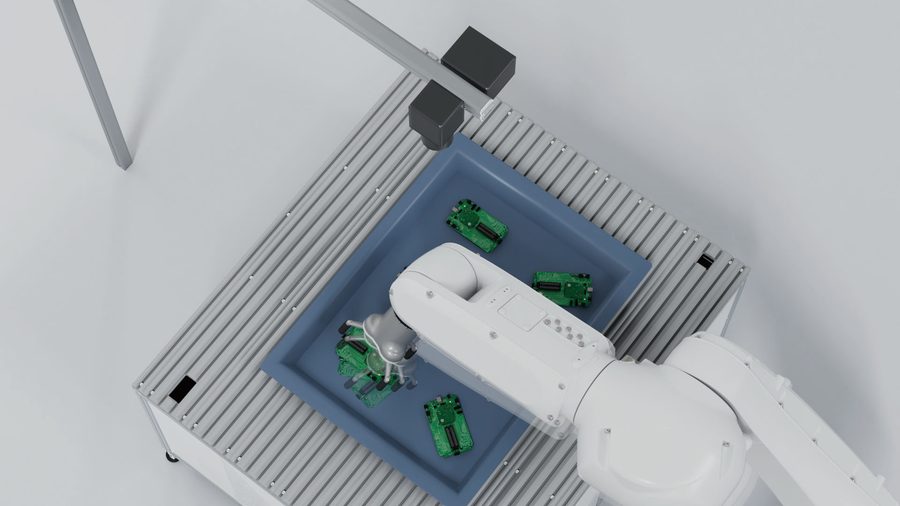
A robot vision system combines cameras, sensors, and image-processing software to allow robots to detect objects, determine their position, and guide robotic movement. Using visual data, the robot can identify the location, orientation, and sometimes the shape of objects in its environment. The robot controller then adjusts its motion to interact with those objects accurately.
This technology enables robots to perform tasks that previously required human perception, such as:
- Locating parts on moving conveyors
- Identifying product variations
- Correcting positioning errors
- Handling randomly arranged components
- Performing quality inspections
Without vision systems, robots rely on fixed positions and precise fixtures. With vision, robots become adaptive automation tools capable of responding to real-world variability.
Why Robot Vision Systems Are Critical for Modern Automation
Manufacturing environments today are changing faster than ever. Companies face growing pressure to deliver shorter product lifecycles, higher product customization, increased throughput, and reduced labor dependence.
Robot vision systems help manufacturers meet these challenges by enabling:
- Flexible Automation: Vision allows robots to adapt to variations in part placement, orientation, or product type without requiring expensive fixtures.
- Higher Productivity: Vision-guided robots can operate continuously while maintaining high accuracy, increasing throughput across production lines.
- Improved Quality: Vision systems enable automated inspection, alignment correction, and error detection.
- Reduced Labor Dependence: Many tasks previously requiring skilled operators such as part identification or manual sorting can now be automated.
2D Robot Vision Systems
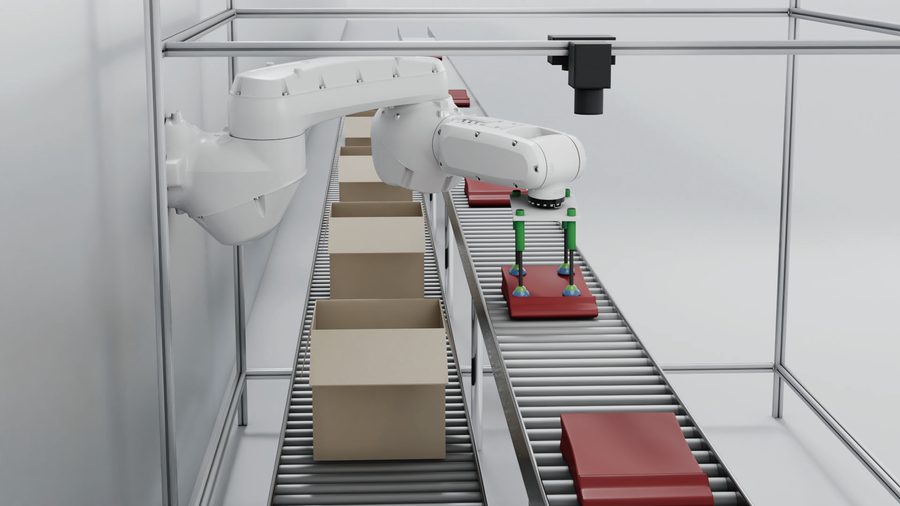
2D robot vision systems analyze images captured by cameras to detect objects on a flat surface. These systems determine X and Y coordinates and rotational orientation to guide robotic movements.
Because they do not measure depth, 2D vision systems are best suited for structured environments where objects lie on a plane. 2D vision is widely used in industries such as packaging, electronics manufacturing, and food processing.
Typical applications include:
- Conveyor tracking
- Pick-and-place operations
- Barcode and QR code reading
- Label inspection
- Product identification
- Alignment correction
These systems are known for their high speed, reliability, and cost efficiency.
Case Study Example: Vision-Guided Case Packing
A certified Kawasaki Robotics integrator implemented a case packing automation cell using a Kawasaki RS007L robot with vision recognition software. The system tracks bagged products on a conveyor and calculates optimal pick positions in real time. Results included:
- 20 bags picked per minute per robot
- flexible handling of different product and box sizes
- labor savings equivalent to three workers
This type of automation demonstrates how 2D vision systems enable high-speed robotic productivity in packaging environments.
3D Robot Vision Systems
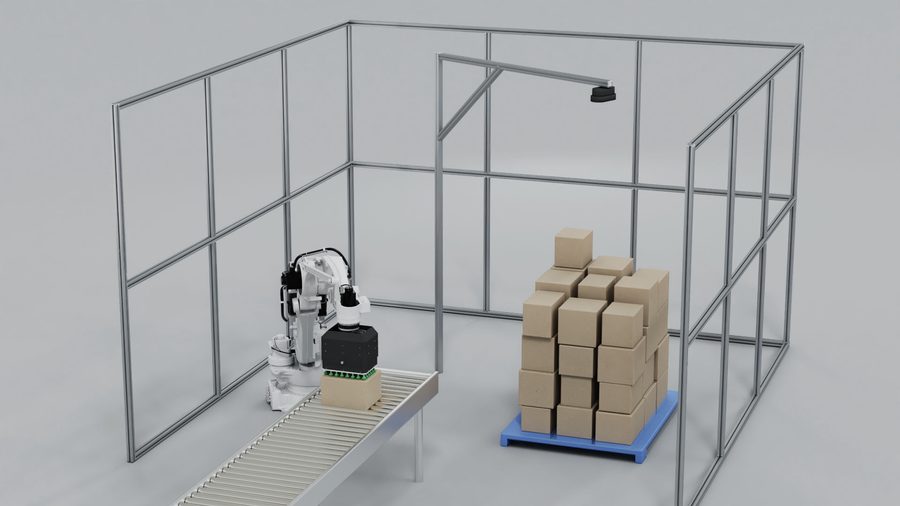
While 2D vision detects objects on flat surfaces, 3D robot vision systems capture depth information, enabling robots to determine X, Y, and Z coordinates as well as object tilt and orientation. This allows robots to interact with objects in complex or unstructured environments.
3D vision systems enable robots to:
- Identify irregular shapes
- Detect height variations
- Recognize overlapping objects
- Determine optimal grasping points
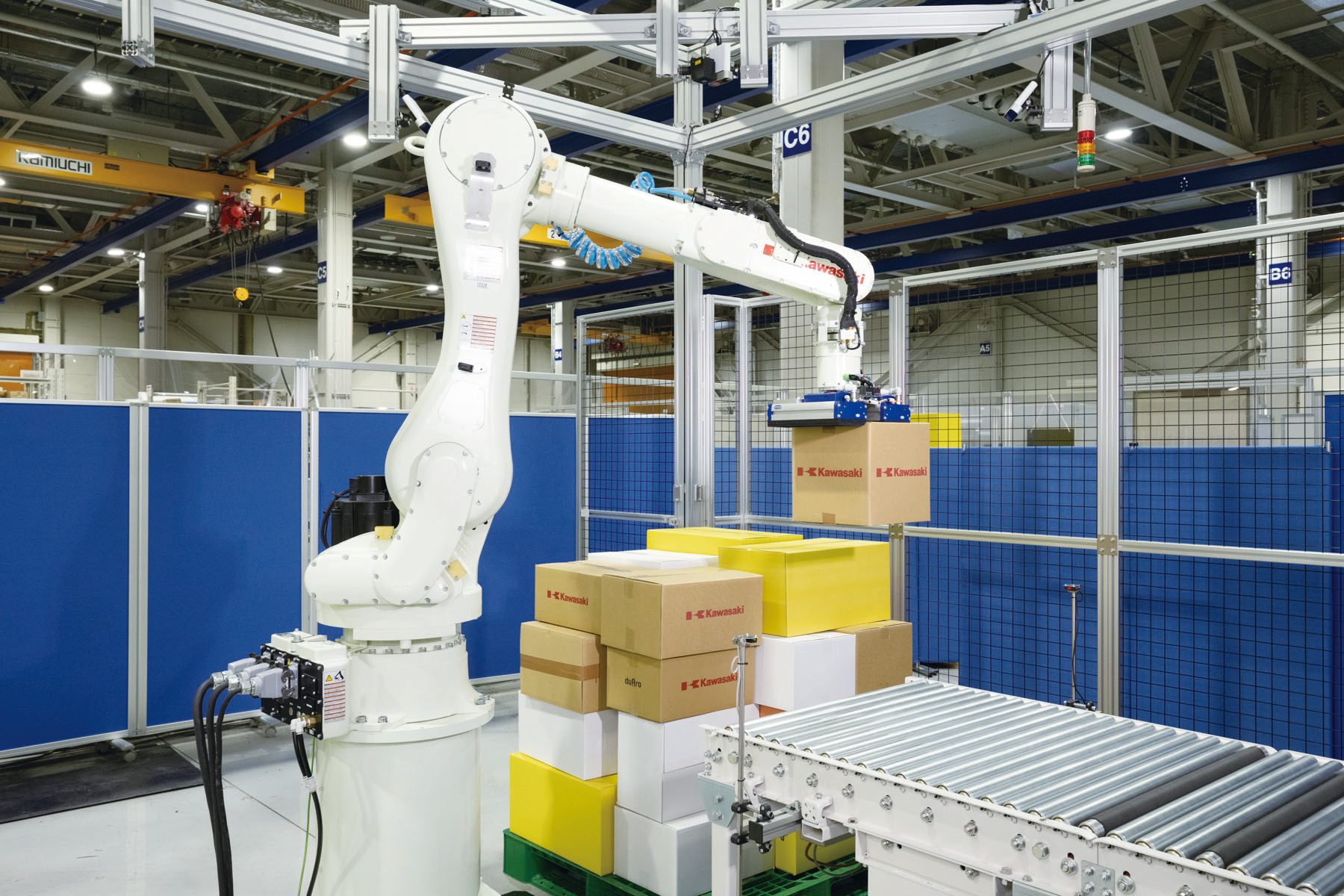
3D vision systems are essential for advanced automation tasks, including:
- Bin picking
- Depalletizing
- Complex assembly
- Random part handling
- Logistics automation
- Material handling
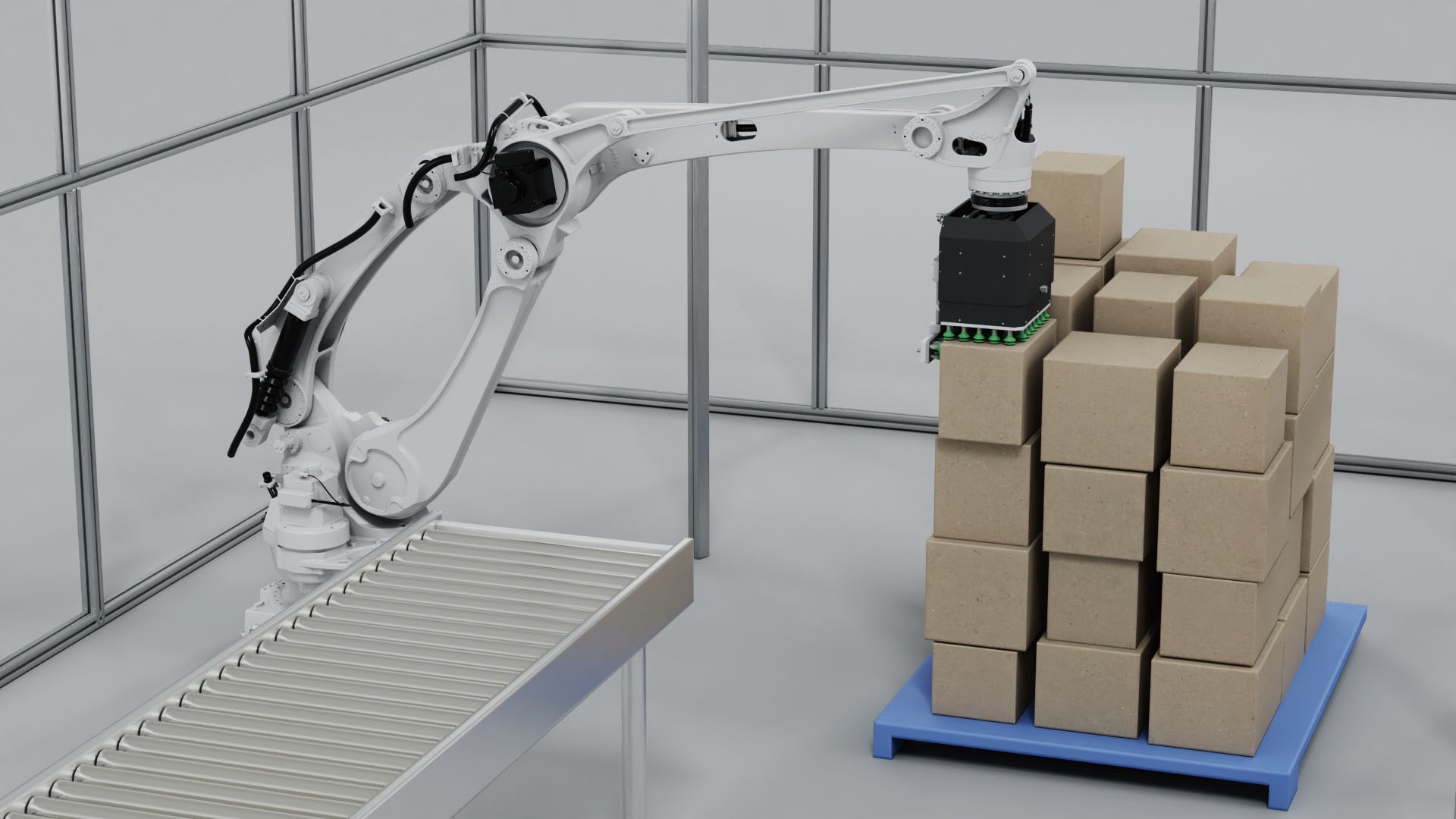
These applications are common in industries such as automotive, aerospace, logistics, and metal fabrication.
Case Study Example: Aerospace Vision-Guided Assembly
In one advanced application, Kawasaki robots equipped with 3D vision automated the installation of aircraft nutplate components with over 200 variations and 28 possible configurations. Using three Kawasaki R Series robots with unified vision software, the system achieved:
- faster cycle times
- improved process consistency
- 97% part quality consistency across production
This type of automation would be extremely difficult without advanced robot vision.
Technology-Agnostic Vision Integration
One of the most important considerations when implementing robot vision systems is integration flexibility. Some robotics platforms require proprietary vision systems, limiting customer choice and increasing long-term risk. Kawasaki Robotics takes a technology-agnostic approach, allowing customers and system integrators to choose the best vision solution for their application.
Our robots are vision-ready, and the following communication protocols are included:
- TCP/IP
- UDP
- Ethernet/IP
This enables seamless integration with many leading vision providers, as seen below. For manufacturers, this approach ensures maximum flexibility and future-proof automation systems.
2D VISION PARTNERS




3D VISION PARTNERS



Choosing Between 2D and 3D Robot Vision
Both technologies play important roles in industrial automation.
| Application | Recommended Vision |
| Conveyor tracking | 2D vision |
| Product inspection | 2D vision |
| Barcode / Label verification | 2D vision |
| Random bin picking | 3D vision |
| Depalletizing | 3D vision |
| Complex assembly | 3D vision |
Many modern automation systems combine both 2D and 3D vision technologies to maximize efficiency.
The Future of Robot Vision Systems
Robot vision systems are evolving rapidly with advances in:
- artificial intelligence
- machine learning
- edge computing
- high-speed industrial cameras
These technologies are enabling robots to handle increasingly complex tasks that once required human perception. As production environments become more dynamic and product variability increases, vision-guided robotics will become a core component of intelligent automation systems.
Manufacturers that adopt robot vision technologies today are positioning themselves for greater flexibility, higher productivity, and long-term competitiveness.
Why Manufacturers Choose Kawasaki Robotics for Vision-Guided Automation
Kawasaki Robotics combines over 50 years of robotics innovation with a flexible approach to automation technology.
Our vision solutions deliver:
- open integration with leading vision providers
- vision-ready robot controllers
- proven performance across industries
- scalable automation platforms
Whether implementing 2D conveyor tracking or advanced 3D bin picking, Kawasaki Robotics helps manufacturers deploy vision-guided automation with confidence.
Key Takeaways
- Robot vision systems allow industrial robots to detect objects and guide movement using cameras and sensors.
- 2D vision systems excel in high-speed, structured environments.
- 3D vision systems enable robots to handle complex, randomly arranged parts.
- Kawasaki Robotics supports technology-agnostic vision integration, enabling compatibility with leading vision providers.
- Vision-ready controllers simplify deployment and improve reliability.
As automation continues to evolve, robot vision systems will play a central role in enabling smarter, more flexible manufacturing operations.