
Collaborative robots
what are cobots?
Collaborative robots – commonly known as cobots – are a new generation of robotic systems designed to work safely and efficiently alongside humans. Unlike traditional automation solutions, cobots are built with advanced sensors, intuitive programming interfaces, and integrated safety features that allow direct human-robot interaction without the need for extensive safety fencing.
The key difference between cobots and conventional industrial robots lies in their purpose and design philosophy. Traditional industrial robots are typically engineered for high-speed, high-volume tasks in fully automated, isolated environments. Cobots, on the other hand, prioritize flexibility, ease of use, and safe collaboration. They can be quickly deployed, reprogrammed, and integrated into existing workflows, making them especially suitable for dynamic production environments.
what are advantages and applications of cobots?
Cobots offer a range of compelling advantages. Their intuitive programming—via hand-guiding and app-based interfaces—significantly lowers the barrier to entry for automation and allows trained operators, without specialist robotics expertise, to set up and adapt applications on a daily basis. At the same time, cobots deliver high performance without compromising on application range: they can operate at high speeds with excellent repeatability, or in a slower, space-saving collaborative mode, depending on the task requirements.
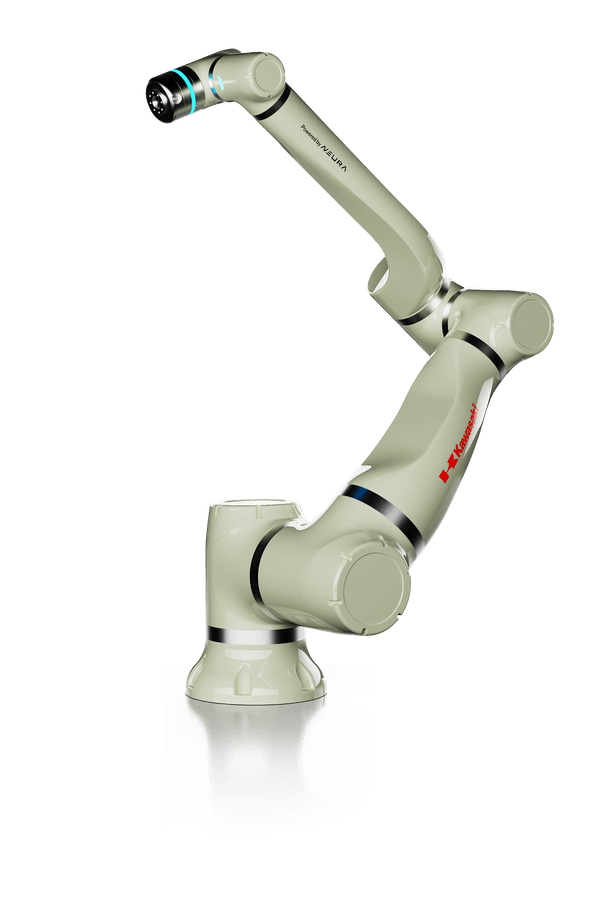
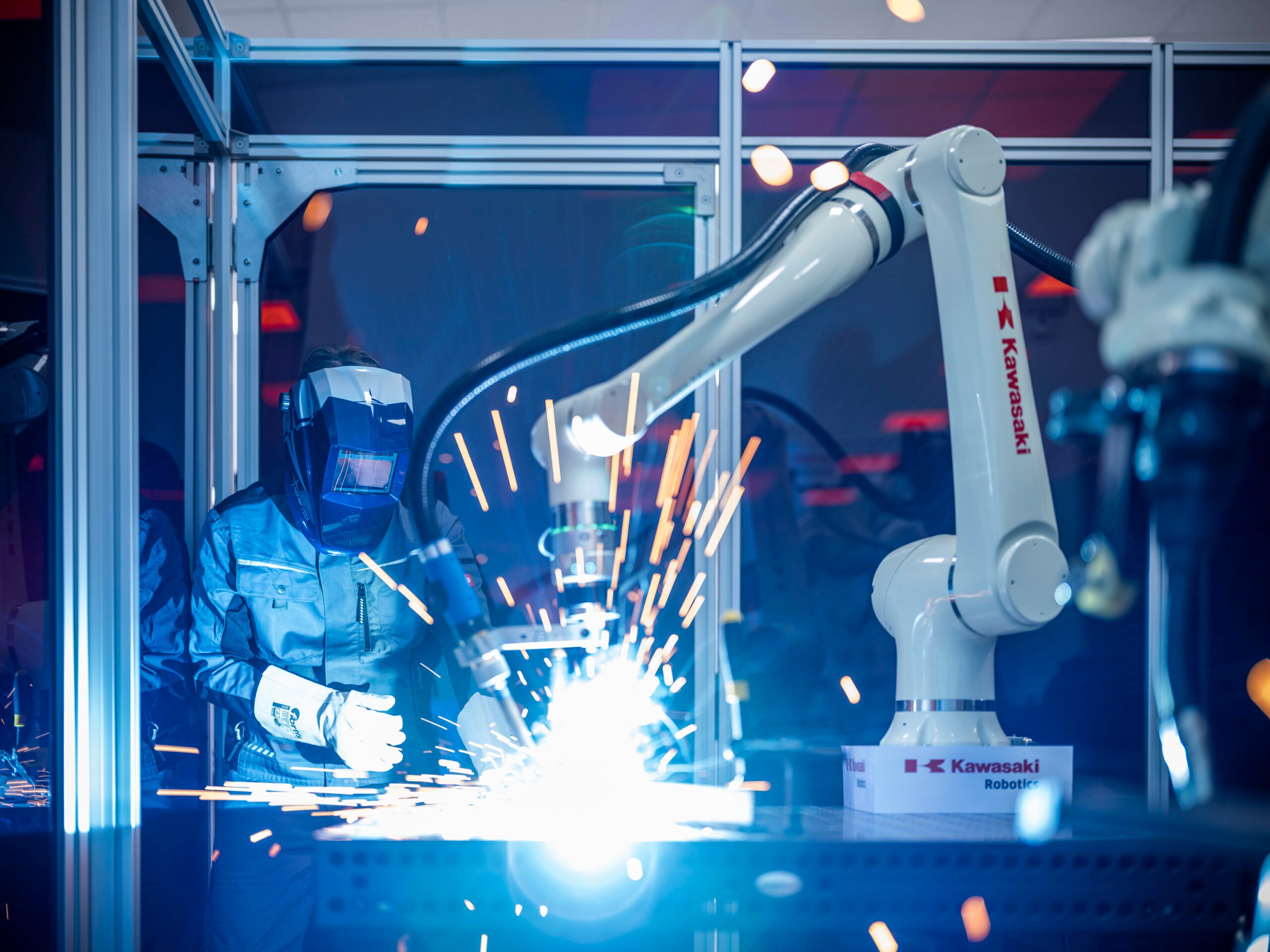
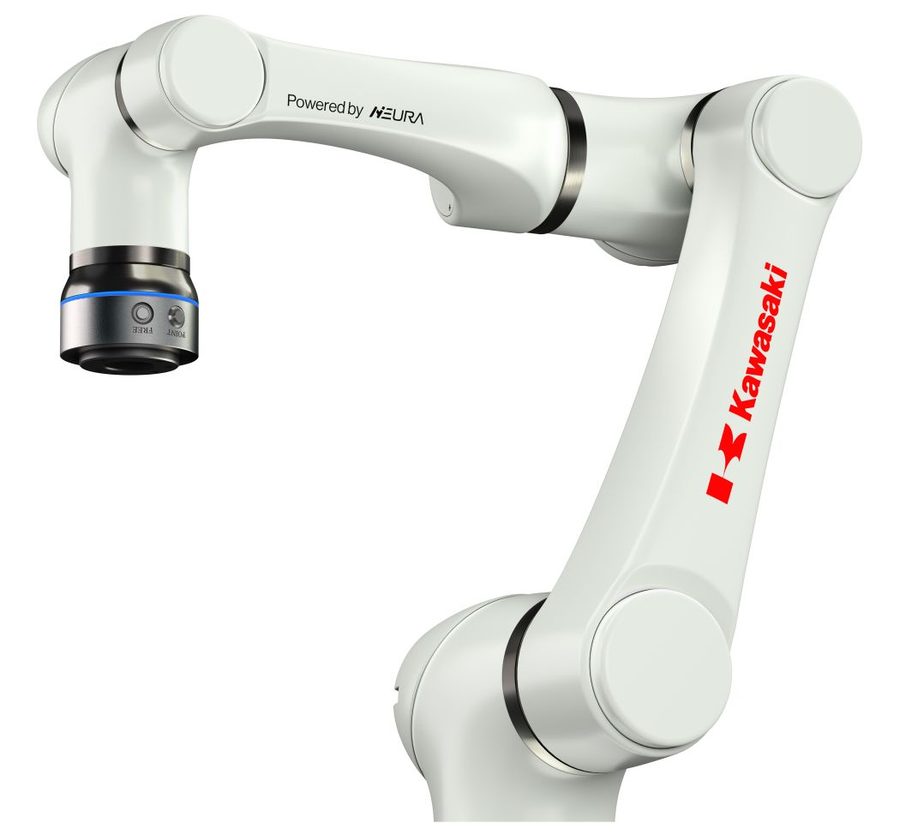
Cobots such as the Kawasaki Robotics CL Series – designed and assembled in Germany – meet high quality and engineering standards, including robust protection through appropriate IP classifications for industrial environments. Their versatility makes them suitable for a wide spectrum of applications—from pick-and-place and palletizing to machine tending and even welding. Typical cobot applications include assembly, packaging, quality inspection, and material handling, where they complement human workers by taking over repetitive or ergonomically demanding tasks while enabling greater overall efficiency.
When does an industrial robot offer more value?
However, there are also scenarios where the advantages of a cobot are not required or more powerful automation is necessary. If your production involves a fixed, highly repetitive application and peripheral equipment necessitates an extended safety concept, a traditional industrial robot may be the more suitable choice. With high-performance robots such as the RS Series for handling applications and the BA Series for welding, Kawasaki Robotics offers highly specialized solutions tailored to specific use cases. These systems are optimized for maximum performance, including even shorter cycle times, and are available in dedicated variants—for example, models designed specifically for use in the food industry.
best of both worlds: the cl series cobots
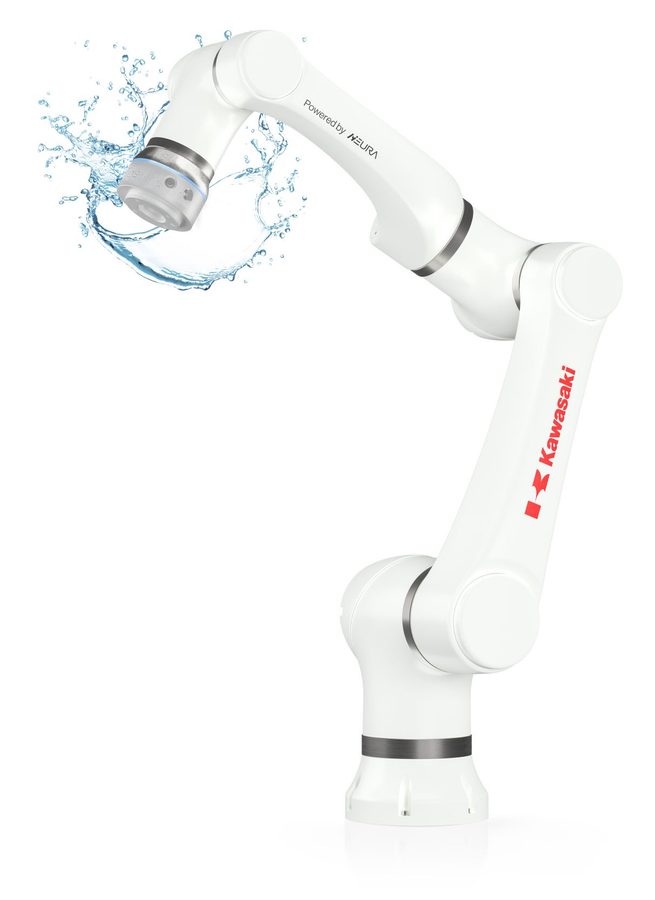
50 years of robotics expertise and leading technology made in Japan meets automation innovation made in Germany. With their new CL line and a variety of payloads and reaches, Kawasaki Robotics provides an entirely new and agile approach to collaborative robotics – powered by the partnership with Neura Robotics.
- No Compromise: The CL Series offers the best of both worlds, with full-on industrial scale performance and speed paired with maximum protection and all advantages of collaborative robotics. Combined with an intuitive user interface, the CL Series makes automating production lines easier than ever before.
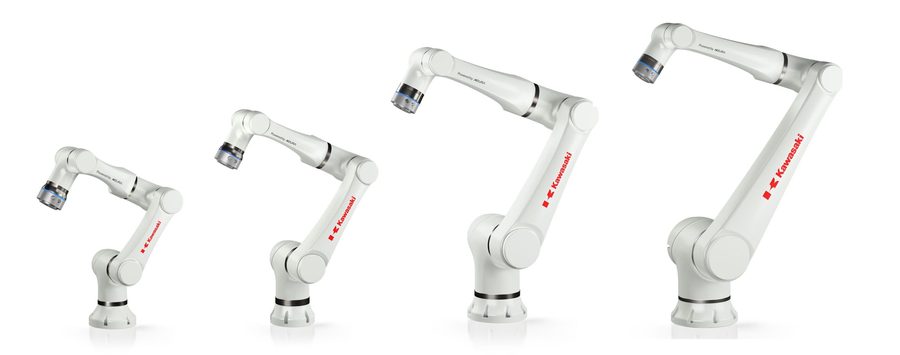
- Flexible Line-up: With payloads and reaches of 3kg/590mm, 5kg/800mm, 8kg/1300mm and 10 kg/1000mm, the four models of the CL Series offer the perfect solution for every scenario. Free mounting orientations, extremely small footprints and IP66 classification provide additional flexibility – for all models. With four additional heavy payload models able to move up to 30 kg, the CL Series will become even more versatile.
- Made for any Use Case and Environment: The CL Series brings together industry-leading speed of 200°/s, and repeatability of ± 0.02 mm for all models. Our collaborative robot line is the perfect choice for automating simple and repetitive tasks – effectively saving costs and maximizing revenue.
- Maximum Safety: Its proprietary safety architecture and many features for safety positions, speed, torque, zones, limits and collision detection allow the CL Series Cobots to operate alongside human workers.
- Well Protected: Thanks to its compact and robust design and IP66 rating, the CL Series can be used in all kinds of harsh environments that may not be suitable for other collaborative robots. Similar to Kawasaki industrial robots, all data and power cables run safely through the robot arm. In addition, dirt can be easily washed off.
- Full Connectivity: The CL Series covers common interfaces such as Digital I/O, safety I/O and Ethernet/IP. The TCP connector flange offers digital I/O ports (in/out), analogue in ports, and 24V 600 mA power supply.

CL SERIES
Intuitive, powerful and reliable.
- Flexible lineup covering 3 to 10 kg payload capacity
- Maximum reach of up to 1,300 mm
- Compact and robust design and IP66 rating
- Industry-leading speed of 200°/s, and repeatability of ± 0.02 mm for all models
CL SERIES Heavy Payload
For more challenging tasks
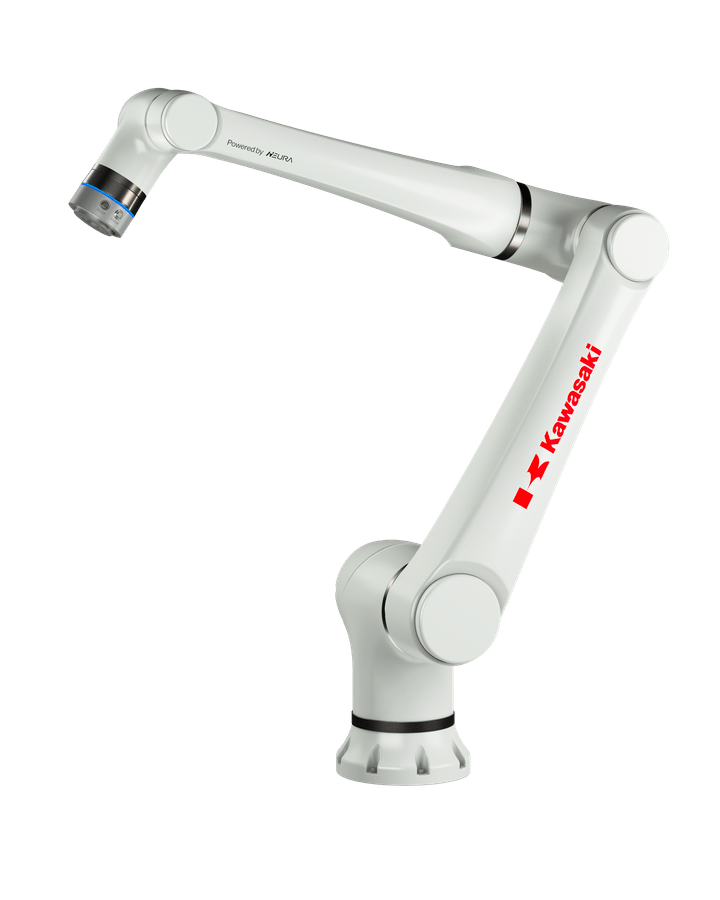
- Flexible lineup covering 15 to 30 kg payload capacity
- Maximum reach of up to 1,800 mm
- Compact and robust design and IP66 rating
- Short cycle times and reliable processes due to high repeatability (±0,05mm) and speed (up to 5 m/s)