
- IndustriesConstruction, Machinery & Metal Manufacturing
- ApplicationsMaterial Handling, Machine Tending
- Robot SeriesAstorino, RS series, BX/BT series, ZX series, M series
A leading international manufacturer of high-end plastic solutions based in Austria has relied on Kawasaki Robotics for around 25 years: from 31 automated systems to new training concepts featuring the Astorino teaching robot.
Founded in 1948 as a small locksmith shop in Bad Hall, Upper Austria, AGRU is now one of the world’s leading full-service providers of high-quality, durable plastic solutions, such as piping systems and semi-finished products. AGRU supplies virtually every industrial sector worldwide—from the water and gas industries to the semiconductor and pharmaceutical sectors, and on to aircraft and shipbuilding. Individual customer requirements remain the focus to this day. The family-owned company, with more than 1,000 employees worldwide, focuses on tailor-made solutions for all industries—and is known for its flexibility and the highest quality. Automation plays a central role in this: Kawasaki Robotics has been an integral part of AGRU’s production facilities for around 25 years.
Today, this industry pioneer operates out of six production facilities in Bad Hall and has a global presence through partners on every continent. While mass production is the company’s mainstay and can be quickly automated, custom manufacturing is not only the company’s flagship offering but also a constant challenge. Andreas Zemsauer, Production Manager for E-Fittings at AGRU, explains: “At the core of our corporate philosophy is meeting customer needs on an individual basis. Our newest facility, for example, is designed entirely for custom parts and single-unit production. A key challenge for us in recent years and for the future has always been: How do we automate small batch sizes in a practical way?”
Employees, Products, and Manufacturing: Sustainability and Durability Matter
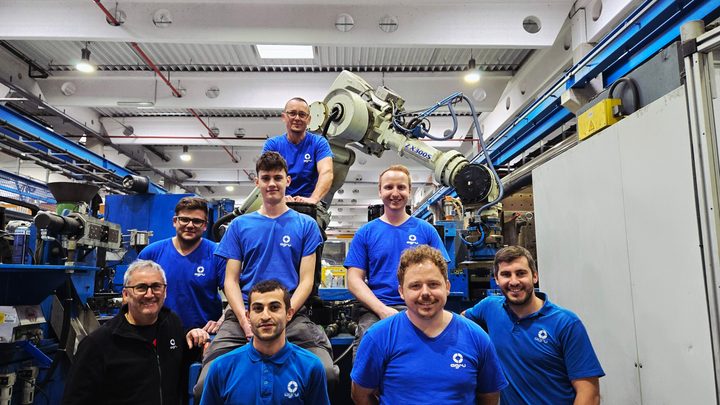
In addition to customized solutions for customers, continuity and longevity are of central importance to AGRU. The above-average length of service speaks for itself: many employees have been with the company for more than 35 years, and some families have even worked there across multiple generations. Andreas Zemsauer himself has been with the company for over 20 years and has held a management position since 2016. “I completed my apprenticeship with a high school diploma (KTLA) at AGRU. And to this day, AGRU stands for vision, strong teamwork, and a focus on the highest possible quality.”
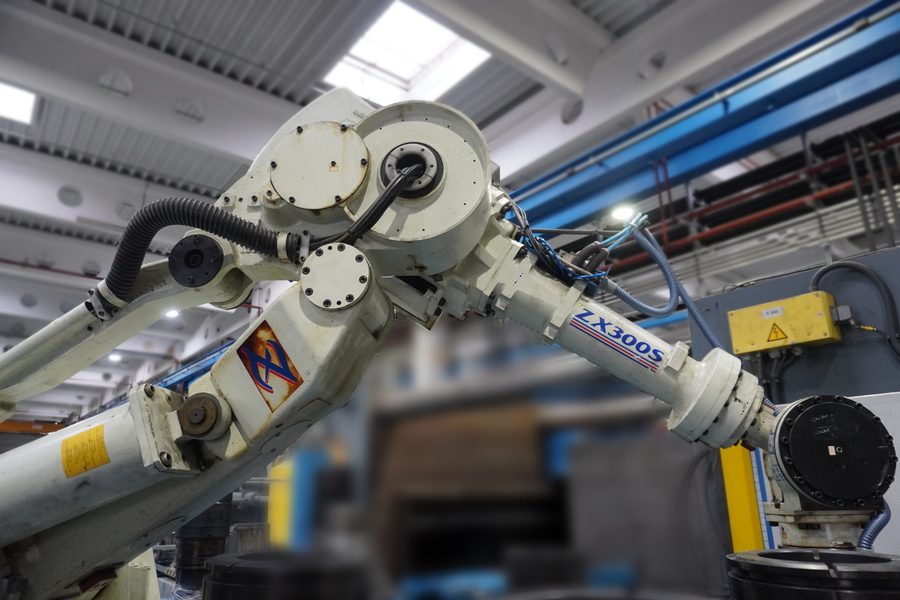
The employees are not alone in their long tenure: Since 2001, a Kawasaki Robotics ZX300 has been in continuous use in plastic production—with more than 117,000 operating hours to date. Also since 2001, additional systems for the production of E-fittings have been steadily added; 67 Kawasaki robots are currently in use. The ZX300S was the first of many: AGRU’s production facilities utilize numerous generations and models of Kawasaki robots—including additional ZX Series robots designed for heavy payloads, as well as several FS Series robots with payload capacities of 50 and 80 kg. The proven BX series for handling heavy workpieces is also installed in many facilities and is valued by the AGRU team for its reliability and robustness.
Expertise and Support from Kawasaki Robotics and More Robots
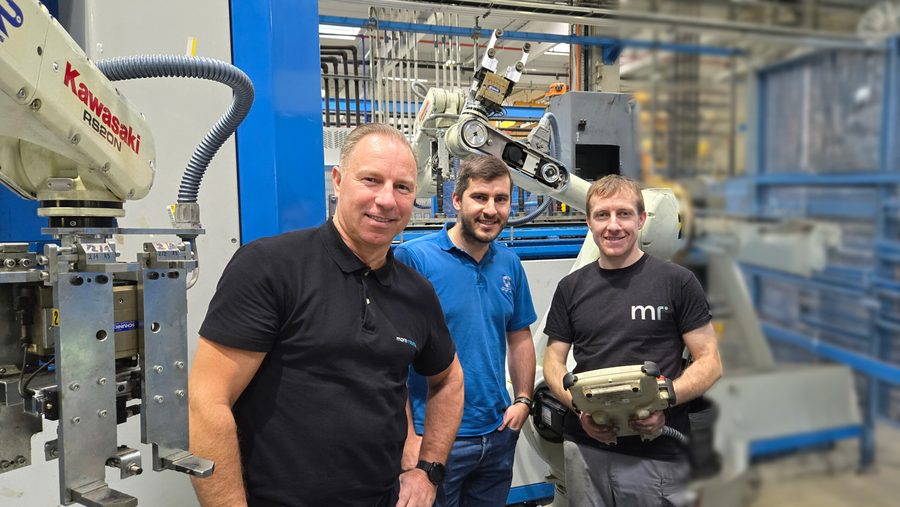
Since 2023, AGRU has been working closely with the Austrian Kawasaki Robotics partner More Robots. “The More Robots team brings more than 20 years of robotics expertise to the table and supports us not only in planning but also with fast and reliable technical support. Together, we have been making great strides in our ongoing automation efforts for the past two years,” says Zemsauer. Automating certain processes requires precise planning and extensive testing. Until now, the injection molding process has limited the timeline due to the production of thick-walled parts that require long cooling times.
New approaches to injection molding are now raising the bar for automation. Thanks to new technical developments, the automation cell is also becoming faster and faster. This allows for a continuous increase in output. Massive components are also manufactured, such as large, molded parts that require a working area of 5 x 6 meters—this is where the MX500L heavy-duty robot, among others, comes into play. For Andreas Zemsauer and his team, the balance between speed, cycle time, and stability is always the focus; the right expertise is crucial for developing solutions. Alexander Müller, Managing Director of More Robots, personally supports AGRU: “For 70 years, AGRU has successfully relied on the know-how and experience of its employees. The expertise of Kawasaki Robotics and More Robots has proven to be an ideal complement, particularly for demanding automation projects. Our geographical proximity and local support are, of course, a great help and allow us to provide quick and flexible on-site assistance.”
Effective Prevention of Downtime Through Maintenance
For AGRU, durability and sustainability are not only the top priorities for its products, but also in the production process itself. Many robots have been in service for decades and belong to the older C and D controller generations from Kawasaki Robotics, but what matters most to Mr. Zemsauer and his team is that the existing systems continue to operate for as long as possible. With industrial robots up to 24 years old, spare part availability is naturally a crucial factor: With support from More Robots and Kawasaki Robotics EMEA, AGRU has carefully determined which spare parts to purchase for each system and has stockpiled them locally accordingly.
With great success: In 24 years, there has been no significant downtime. To ensure this continues, AGRU relies on Kawasaki Robotics’ predictive maintenance concept and annual maintenance of all robots at regular intervals—35 robots are serviced each year. “Even though Kawasaki has made impressive advancements in newer models, our robots are designed to run as long as possible. Thanks to the support from More Robots and Kawasaki, we can continue to guarantee this in the future,” says Andreas Zemsauer. Several AGRU employees have also completed comprehensive courses in programming and maintenance at the Kawasaki Robotics Academy in Neuss.
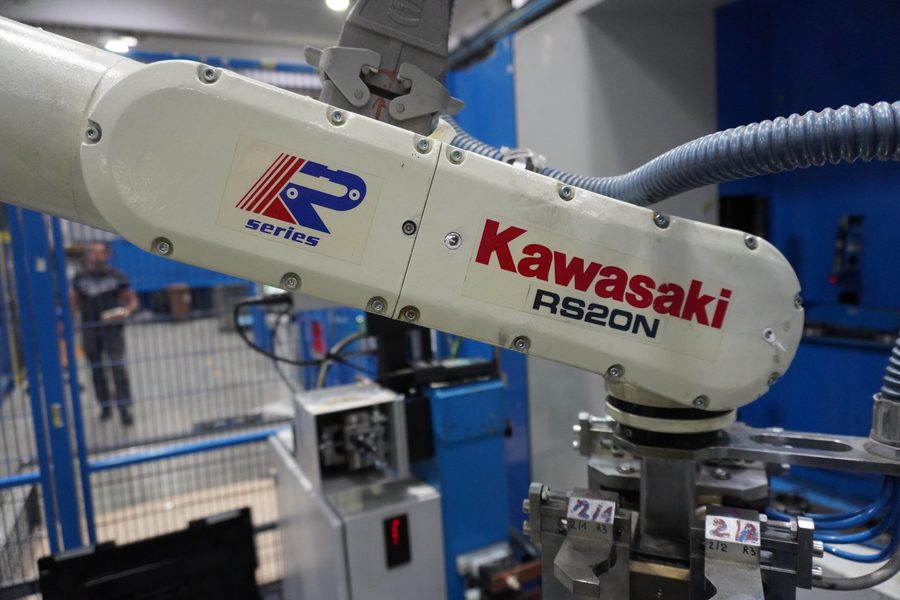
High-end solutions for international customers
International exports now account for around 95 percent of AGRU’s total revenue; many customers are in the infrastructure sector, such as drinking water systems. While most customer projects in Asia are still in the development phase, AGRU products in Europe and North America are primarily used for renovation and maintenance—in the U.S., for example, many old reinforced concrete structures prone to erosion have been replaced for years by AGRU’s durable plastic systems optimized for drinking water. AGRU often works closely with the Austrian plastics manufacturer Borealis on these projects. “We have long observed the international trend toward sustainable, durable solutions instead of disposable products. Our high quality standards and customized parts for all needs are a key competitive advantage worldwide,” says Andreas Zemsauer.
With PURAD, AGRU has also developed a specialized, chemically highly resistant piping system for the semiconductor and pharmaceutical industries, where the highest hygiene standards apply. AGRU primarily supplies companies in Asia with these solutions. A dedicated cleanroom in Plant 6 enables the continuous development of plastic systems for numerous international chip and pharmaceutical manufacturers.
Despite optimal use of space, the construction of new plants, and expansion options, the available space for equipment is limited even at AGRU. Consequently, precise planning and, often, many compromises are necessary. To this day, Kawasaki robots provide significant added value in this regard, explains Andreas Zemsauer: “Our plants are constantly reaching their spatial limits. As early as 2001, the small footprint and resulting low space requirements of Kawasaki robots were a major advantage for us. The newer Kawasaki models do this even better and take up very little space. Combined with the robots’ flexible working ranges, this consistently gives us significantly more leeway. Just like the robots themselves, we make the most of our factory space.”
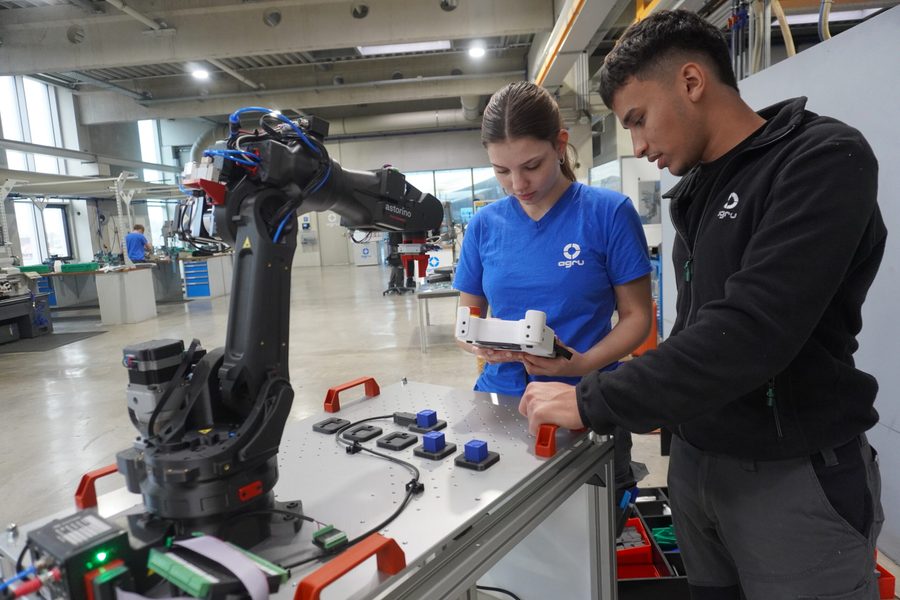
Innovative training concept: Astorino
Kawasaki robots have now also found their way into vocational training: Since 2015, the training company AGRU has operated its own 860-square-meter training workshop where apprentices gain hands-on experience—each year, ten new apprentices are selected from a large pool of applicants. In September 2025, the Kawasaki training robot Astorino was introduced for the first time. The robot, designed specifically for training, consists of 3D-printed components and enables intuitive and authentic learning of robot programming. For the training workshop team, the goals are clear: “How do we shorten the learning curve while simultaneously accelerating it? And how do we overcome apprehensions among trainees and employees? Astorino fulfils exactly these goals and inspires the trainees,” says Mr. Michael Binder, head of the training workshop.
The training workshop is not an isolated area: The trainees work on real projects, explains Mr. Binder: “ASTORINO fits perfectly into the concept: Trainees can pick up the teach pendant and learn real programming—the step up to an industrial robot is then no longer a big one.” The unique concept quickly garnered very positive feedback at trade shows and among new trainees: In 2025, a record number of applications were received—despite fierce competition for new trainees and employees. The regional family-owned business actively cultivates its strong reputation as an employer and training provider. For instance, company executives always attend apprentice award ceremonies and similar events in person and support fresh and innovative approaches to training and continuing education to counter demographic change and the shortage of skilled workers. Most recently, a student project on the automated and AI-supported surface analysis of manufactured components provided an initial foundation for establishing corresponding vision and inspection systems in the long term—thereby ensuring the highest quality while simultaneously reducing the time required.
Conclusion and Outlook
Automation with Kawasaki Robotics has paid off for AGRU: “We have massively increased our efficiency while significantly boosting both our output and the quality of our parts.” While series production is firmly established, the efficient production of small batch sizes continues to present challenges for the AGRU team—challenges it tackles with extensive expertise, clever solutions, and support from Kawasaki Robotics and More Robots. Internal knowledge transfer is an integral part of AGRU’s work culture, allowing the company to continuously build upon successful solutions and improved processes. Automation remains a key factor: The latest robots in production are four BX210Ls, with additional BX300Ls already in the planning stages—just like the Kawasaki robots currently in use, which are known for their long and reliable service life.
Associated Products

Astorino
New B-Version and many options available now!
Astorino is a modern 6-axis robot based on 3D printing technology. Programmable in AS-language, it facilitates the preparation of classes with ready-made teaching materials, is easy both to use and to repair, and gives the opportunity to learn and make mistakes without fear of breaking it.
With Astorino, the teaching process can be innovative and respond to the demands of the modern world. It can also serve as a showcase for a school or university, increasing its attractiveness in the education market.
Astorino: The Facts
• 99.5 % 3D printed
• 6 weeks delivery time (with durable packaging)
• Compatible with Kawasaki Robotics programming language
• Easily available spare parts through 3D printing)
• Linear Track, Machine Vision and more options available
• Training material, technical documents and CAD files included
Learn more about the Pro Station, industrial style teach pendant and many other options such as grippers, conveyors and vision systems in our Astorino brochure! Contact our team with any questions about Astorino!
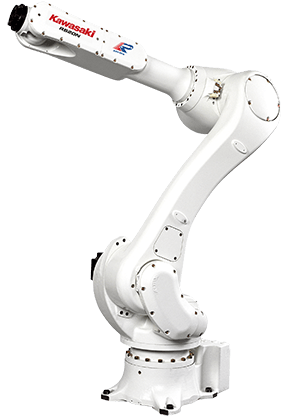
RS020N
HIGH-SPEED, HIGH-PERFORMANCE ROBOT
The R series robots are setting the benchmark for all small to medium duty industrial robots. The compact design, along with industry leading speed, reach and work range make the R series robots ideal for a wide range of applications throughout a multitude of diverse industries.
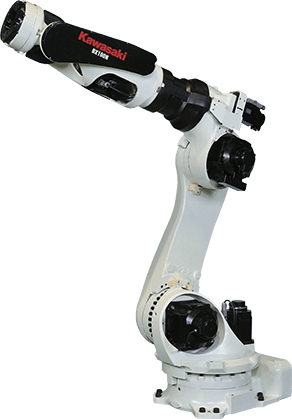
BX100N
OPTIMIZED HANDLING AND SPOT WELDING ROBOT
The BX100N high-speed handling and spot welding robot features a mid-range reach and a hollow wrist for housing cables and hoses. It is suitable for a variety of grippers as well as small and light weld guns, and can be installed close to the workpiece and in high-density applications.
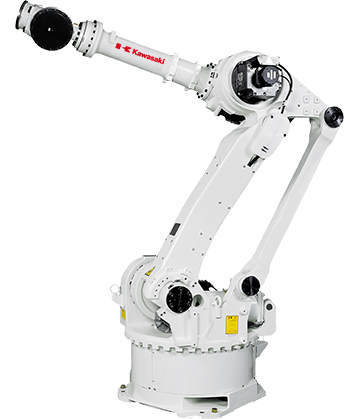
ZX300S
THE FLEXIBLE HEAVY-DUTY ROBOT
The ZX300S robot features a wide motion range and is suitable for a variety of applications, from spot welding to material handling.
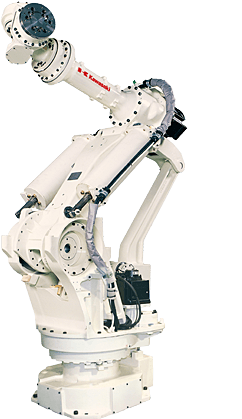
MX500N
INNOVATIVE HIGH WRIST TORQUE ROBOT
The MX500N robot has a maximum payload capacity of 500 kg and reach of 2,540 mm with one of the highest available wrist torque in the industry, which provides the ability to significantly offset heavy payloads from the tool mounting flange. Along with powerful motors, Kawasaki’s original link design for JT3 (arm up-down) gives the robot the power to lift heavy loads without the use of bulky and limiting counterweights, maximizing the robot’s motion range and allowing for a compact footprint.